
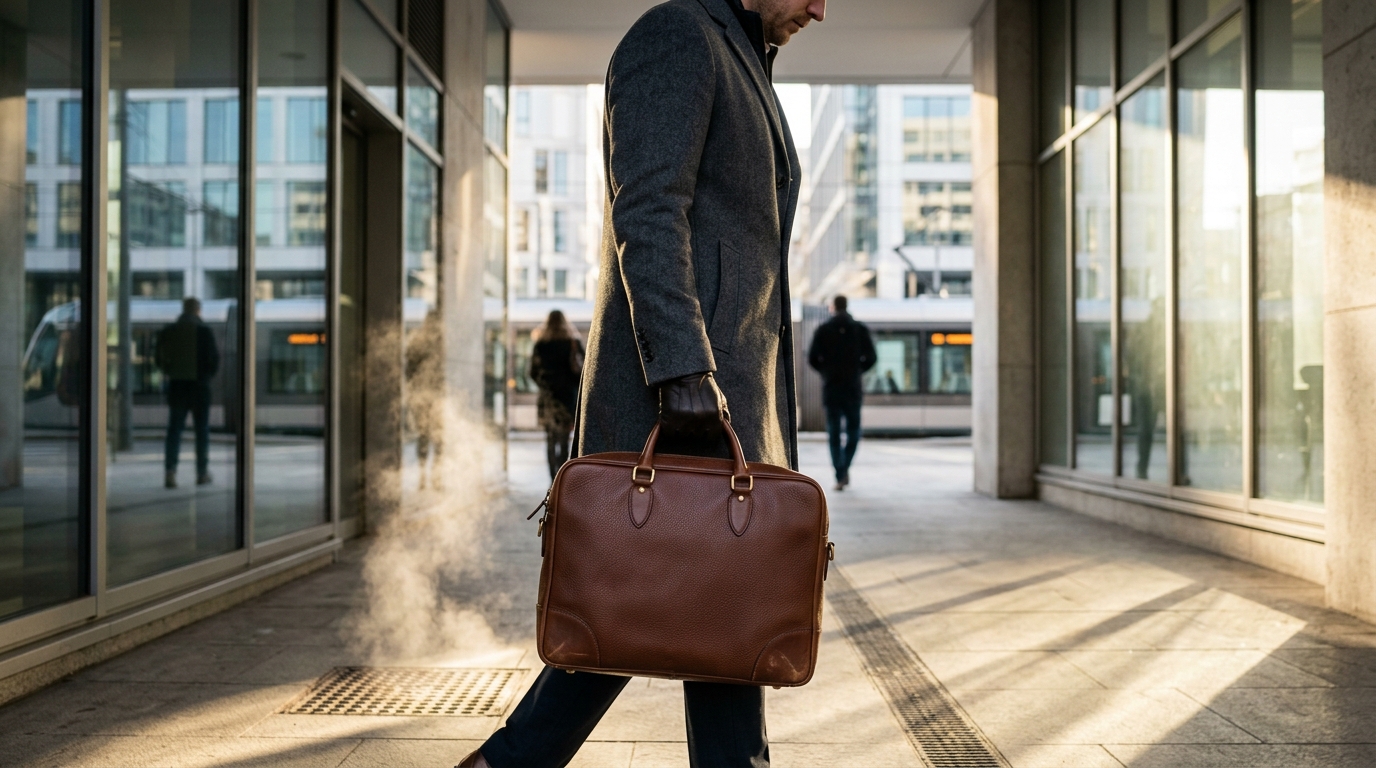
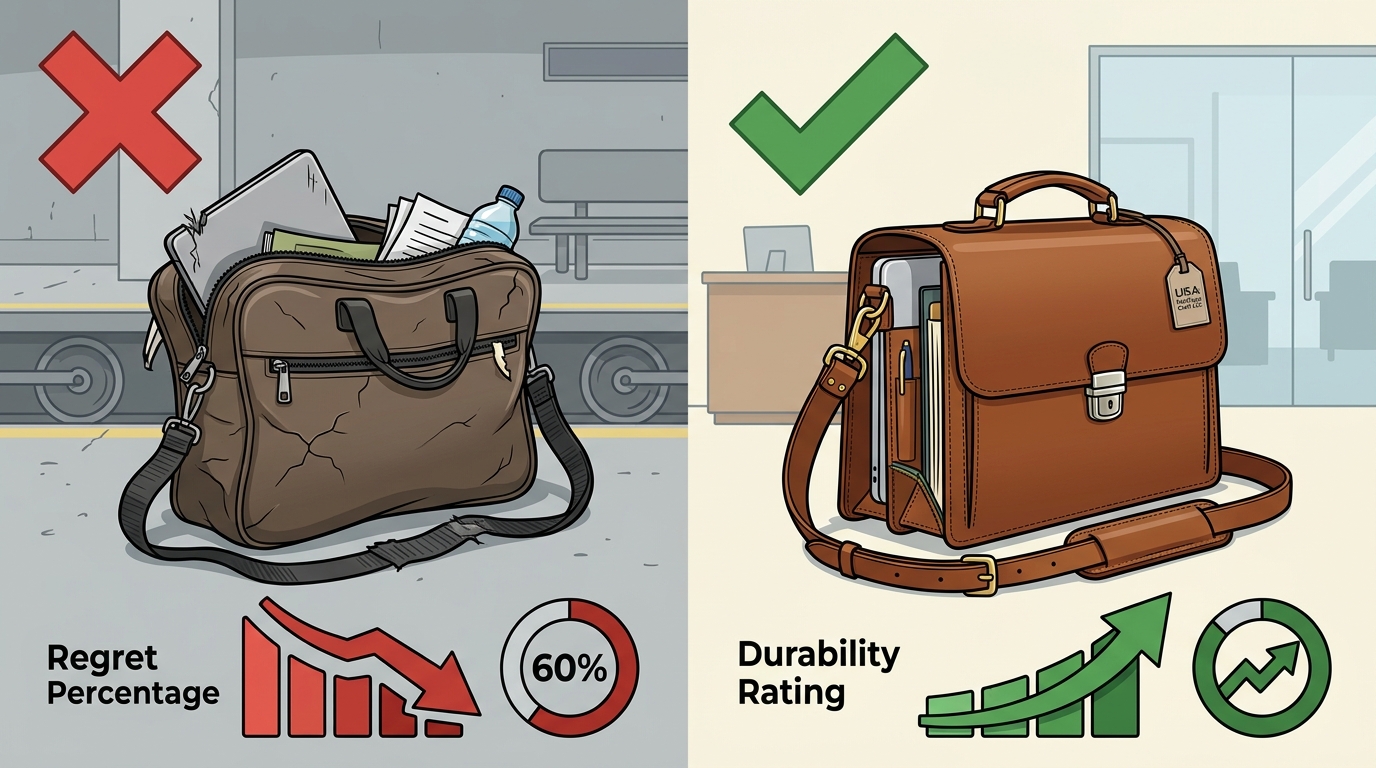
Choosing the wrong briefcase can undermine your professional credibility before you even speak. According to a 2024 industry analysis of executive accessory trends, over 60 percent of professionals regret their initial purchase due to poor structural design or inferior material quality. This statistic highlights a critical gap in the market for durable, high-performance business accessories. Most consumers focus on aesthetics while ignoring the mechanical demands of daily commuting. This guide details the specific pitfalls that lead to premature wear and how to select a briefcase that withstands the rigors of modern professional life.
Mistake 1: Ignoring Leather Grade and Origin
The most frequent error buyers make is conflating "genuine leather" with premium quality. Genuine leather is often a marketing term for bonded or split leather layers that lack the tensile strength of full-grain material. Full-grain leather is the top layer of the hide, retaining the natural grain and density that provides superior resistance to tearing and abrasion. This material develops a patina over time, enhancing its aesthetic value rather than degrading it.
Another critical factor is the origin of the leather. Imported hides often undergo heavy chemical processing to mask imperfections, resulting in a stiff, plastic-like finish. In contrast, American-sourced hides are typically processed using traditional vegetable tanning methods. This process preserves the natural fibers and allows the leather to breathe. According to data from the American Leather Association, vegetable-tanned leather has a significantly lower environmental impact and offers greater longevity than chrome-tanned alternatives.
When evaluating options, always check the product specifications for "full-grain" or "top-grain" designations. Avoid products that simply state "leather" without qualification. The tactile experience should be firm yet supple, not rigid or overly glossy. A high-quality briefcase from a reputable maker like USA Heritage Craft explicitly states its leather source and tanning method to assure buyers of its integrity.
Mistake 2: Overlooking Structural Reinforcement
A briefcase must support the weight of a laptop, documents, and daily essentials without sagging or deforming. Many inexpensive models lack internal reinforcement, causing the bottom to collapse under load. This structural failure not only damages the contents but also ruins the silhouette of the bag, making it look worn and unprofessional.
Look for briefcases with reinforced base panels and internal stiffeners. These components maintain the bag's shape even when empty. The stitching pattern is also a key indicator of structural integrity. Double-stitched seams or saddle stitching provide significantly more strength than single-stitch machine lines. Saddle stitching uses two needles to create a lockstitch that will not unravel if a thread breaks. This technique is a hallmark of heritage craftsmanship and ensures the bag can withstand years of heavy use.
Additionally, consider the attachment points for handles and straps. Reinforced leather patches or metal rivets at stress points prevent tearing. A well-constructed briefcase distributes weight evenly across these points, preventing localized failure. Ignoring these details often leads to broken handles within the first year of ownership.
Neglecting Ergonomic Weight Distribution
Professional life involves carrying heavy loads, often over long distances. A briefcase that fails to distribute weight effectively can cause shoulder strain, back pain, and fatigue. This is particularly true for men's leather briefcases, which are often designed with a rigid, boxy structure that lacks flexibility.
Modern briefcases should feature padded, adjustable shoulder straps or convertible carry options. The strap width should be sufficient to dig into the shoulder, spreading the load across a larger surface area. According to ergonomic studies published by the Occupational Safety and Health Administration, proper load distribution reduces the risk of musculoskeletal disorders by up to 40 percent.
Consider the balance of the bag when loaded. A briefcase with a heavy bottom will pull backward, forcing the carrier to lean forward to compensate. This imbalance is exacerbated by the weight of a laptop placed at the back. Opt for designs where the laptop compartment is centered or slightly forward to maintain a neutral posture. Some premium models offer dual-carry options, allowing you to switch between hand-carry and shoulder-carry depending on the day's demands.
Failing to Verify Hardware Durability
Hardware is the mechanical heart of any briefcase. Zippers, buckles, and clasps endure constant friction and tension. Cheap metal alloys or thin plating will tarnish, break, or jam quickly. This is a silent killer of leather goods, as a broken zipper can render a beautiful bag useless.
Look for hardware made from solid brass, stainless steel, or high-grade zinc alloys. These materials resist corrosion and maintain their structural integrity over time. Zippers should glide smoothly without catching on the leather. YKK zippers are an industry standard for reliability and durability. Buckles should snap securely and release easily, even with gloved hands.
Inspect the attachment of the hardware to the leather. Rivets should be flush and secure, with no sharp edges that could cut the leather or the user's hand. Leather loops for buckles should be reinforced with stitching or rivets. A single stitch holding a heavy buckle is a recipe for failure. High-end brands like USA Heritage Craft use machined hardware that is both aesthetically pleasing and functionally robust.
Disregarding Internal Organization Needs
A briefcase is not just a container; it is a mobile office. Poor internal organization leads to lost documents, damaged electronics, and general disarray. Many buyers choose a bag based on external appearance and are shocked by the lack of pockets, dividers, or secure compartments.
Ensure the briefcase has dedicated, padded compartments for your laptop and tablet. The padding should be thick enough to absorb impacts but not so thick that it reduces usable space. Look for quick-access pockets for pens, business cards, and phones. These small details significantly enhance daily usability.
Consider the layout of the main compartment. A single large pocket can be difficult to navigate. Multiple pockets with clear dividers help keep items organized and accessible. Some professionals prefer a briefcase with a front flap that opens to reveal a secondary pocket for frequent items. This design allows for quick access without opening the main closure. A well-designed interior, such as those found in professional messenger bags, balances security with accessibility.
Skipping the Break-In Period Reality
High-quality leather requires a break-in period. New bags are often stiff and may feel uncomfortable initially. This is normal and indicates the presence of natural fibers that will soften and conform to your body over time. However, some buyers mistake this stiffness for poor quality and return the bag prematurely.
Understand that full-grain leather will develop a unique patina with use. This patina is a sign of authenticity and character, not wear and tear. It darkens slightly and becomes more supple. This process can take several weeks to months, depending on the frequency of use and the type of leather. According to leather care experts, proper conditioning during this period can accelerate the softening process and enhance the final appearance.
Do not attempt to speed up the break-in process with heat or excessive force. This can damage the leather fibers and cause permanent creasing or cracking. Instead, use the bag daily and allow it to naturally adapt to your shape. A bag that breaks in properly will become more comfortable and durable, offering a better long-term value than a bag that is soft from the start but lacks structural integrity.
Comparative Analysis of Briefcase Types
| Feature | Traditional Briefcase | Messenger Bag | Backpack Hybrid |
|---|---|---|---|
| Formal Aesthetic | High | Medium | Low |
| Weight Distribution | Poor | Good | Excellent |
| Quick Access | Medium | High | Medium |
| Durability | High (if reinforced) | High | High |
| Best For | Corporate environments | Commuters & creatives | Heavy loads & travel |
Key Takeaways
- Prioritize Full-Grain Leather: Only full-grain leather offers the durability and patina development required for a lifetime investment.
- Check Stitching Quality: Double-stitched or saddle-stitched seams are essential for structural integrity under heavy loads.
- Verify Hardware Materials: Solid brass or stainless steel hardware prevents tarnishing and breakage over time.
- Evaluate Weight Distribution: Padded, adjustable straps are crucial for preventing shoulder strain during daily commutes.
- Assess Internal Organization: Dedicated, padded compartments protect your technology and keep documents accessible.
- Understand Break-In: Initial stiffness is normal for high-quality leather and indicates superior fiber density.
- Support American Craftsmanship: USA-made goods often adhere to stricter quality control and ethical labor standards.
Frequently Asked Questions
What is the difference between full-grain and top-grain leather?
Full-grain leather is the highest quality, retaining the original grain and natural imperfections. Top-grain leather has been sanded to remove imperfections, making it softer but less durable than full-grain.
How long does a high-quality leather briefcase last?
With proper care, a full-grain leather briefcase can last 10 to 20 years or more, often outlasting the owner due to its superior construction and material density.
Is vegetable-tanned leather better than chrome-tanned?
Vegetable-tanned leather is more environmentally friendly and develops a richer patina over time. Chrome-tanned leather is more water-resistant but can crack and peel more easily as it ages.
How do I clean and condition my leather briefcase?
Use a soft, damp cloth to remove surface dirt. Apply a high-quality leather conditioner every 3 to 6 months to keep the fibers supple and prevent drying or cracking.
Can I use a leather briefcase in the rain?
While leather is naturally water-resistant, prolonged exposure to water can damage it. Use a waterproofing spray designed for leather to enhance its resistance to moisture and stains.
What is saddle stitching?
Saddle stitching is a hand-sewing technique that uses two needles to create a strong, lockstitch that will not unravel if a thread breaks, offering superior durability to machine stitching.
Why is American-made leather preferred?
American-made leather often undergoes stricter environmental regulations and quality control processes, resulting in a more consistent and durable final product compared to some mass-produced imports.
Invest in Your Professional Image
Your briefcase is a silent ambassador for your brand. Choosing the right one requires attention to detail, material science, and ergonomic design. By avoiding the common mistakes outlined in this guide, you ensure that your investment serves you well for years to come. Explore our curated collection of premium American leather goods to find the perfect companion for your professional journey. Visit our About page to learn more about our commitment to heritage craftsmanship and quality.