
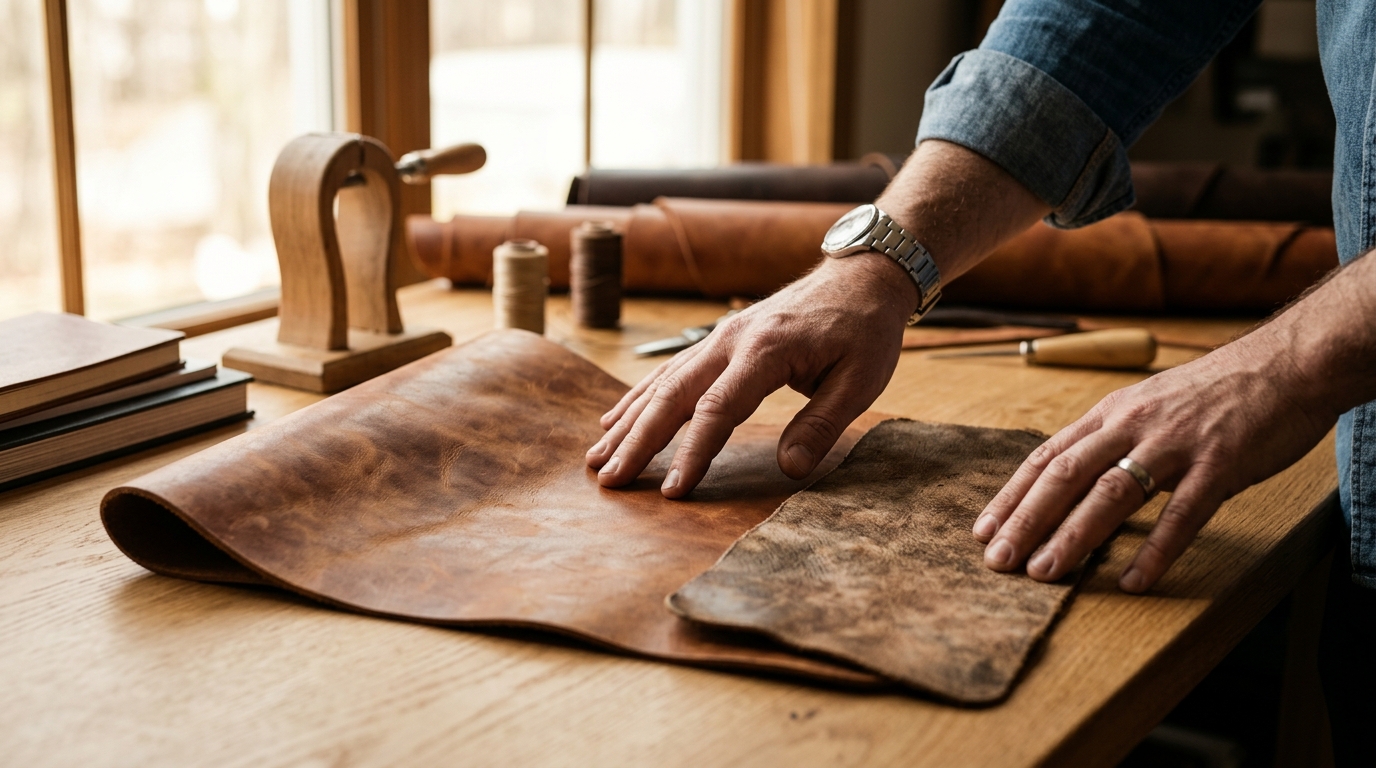
Most consumers walk into a store or browse an e-commerce site assuming all leather is created equal. The reality is starkly different. According to industry data on material degradation, genuine leather products often begin to show structural failure within two to three years of regular use, whereas full-grain leather maintains integrity for decades. This distinction is not merely semantic. It defines the difference between a disposable accessory and a generational investment. Understanding this gap is critical for anyone who values durability, aesthetics, and long-term value in their daily carry items.
What Is Full-Grain Leather?
Full-grain leather is the highest quality leather available. It is derived from the top layer of the hide, which contains the tightest fiber structure. This layer is naturally dense and resistant to moisture and wear. Unlike other grades, full-grain leather is not sanded or buffed to remove natural imperfections. Instead, it is only dyed and finished. This process preserves the leather's natural grain, including scars, wrinkles, and texture. These marks are not defects. They are proof of authenticity and origin.
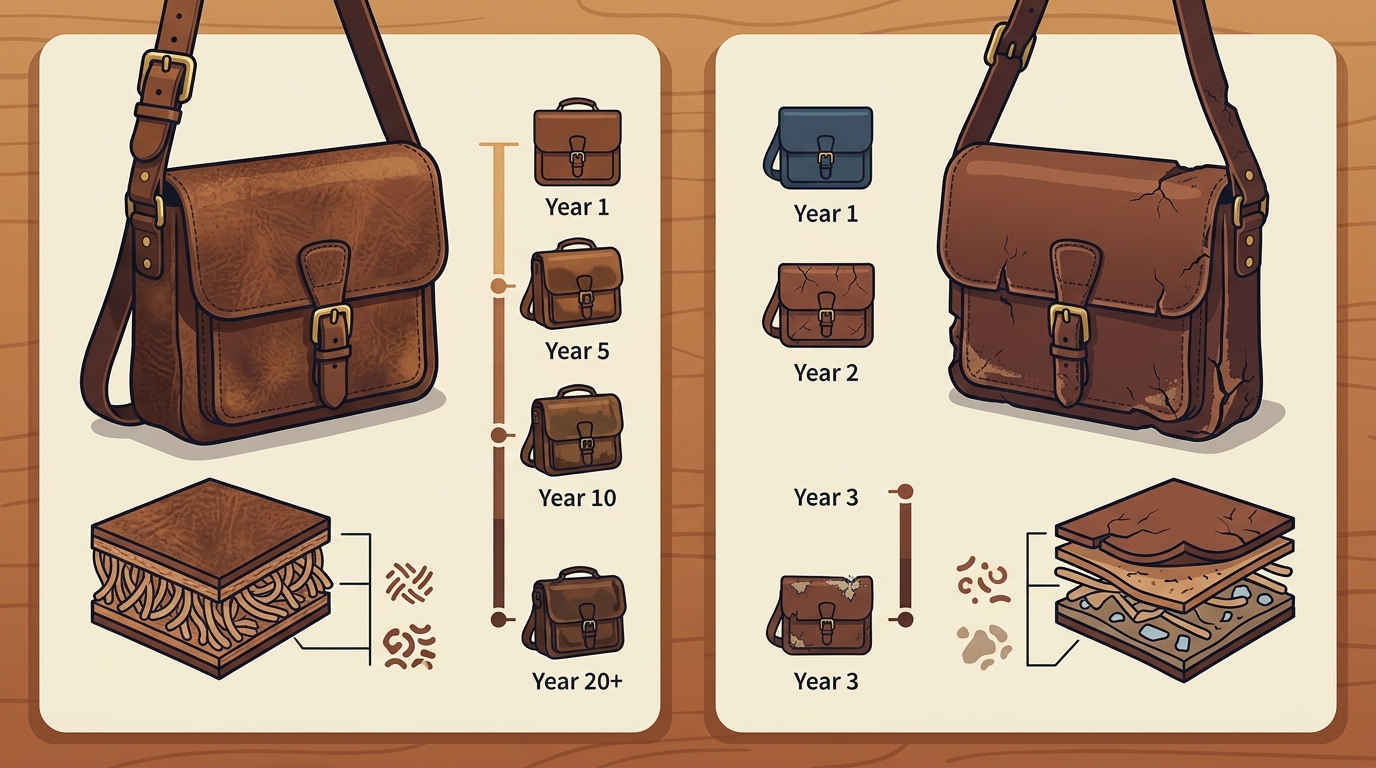
The structural integrity of full-grain leather comes from its intact collagen fibers. These fibers are arranged in a complex, interlocking network that provides exceptional tensile strength. When subjected to stress, the material distributes the load across this network rather than failing at a single point. This is why full-grain leather bags and wallets resist tearing and stretching over time. The material also develops a patina. A patina is a soft, glossy sheen that develops on the surface as the leather ages and interacts with oils, sunlight, and handling. This aging process enhances the visual appeal of the item, making it more unique with every year of use.
At USA Heritage Craft, we exclusively use full-grain leather. Our commitment to this material is rooted in our belief that tools and accessories should reflect the discipline and longevity of the professionals who use them. Every piece we produce is hand-cut and hand-stitched by artisans who understand the nuances of this premium material. We source our hides from cattle raised for meat production, ensuring that no waste goes to waste. This ethical sourcing model aligns with our broader mission to support sustainable, high-quality manufacturing practices.
What Is Genuine Leather?
Genuine leather is a term that is often misunderstood. It does not denote a specific grade of quality. Instead, it is a generic label applied to leather products that contain real leather fibers. However, the leather used in genuine products is typically the lowest grade available. It is often made from the remnants of hides that have been split, sanded, and bonded together with synthetic materials. This process destroys the natural fiber structure, leaving the material weak and prone to cracking.
The manufacturing process for genuine leather involves heavy chemical treatment. The hides are often coated with polyurethane or vinyl to create a uniform appearance. This coating masks the natural texture of the leather but also prevents it from breathing. As a result, genuine leather products do not develop a patina. Instead, they tend to peel, flake, or crack as the synthetic coating breaks down under stress. This degradation is irreversible. Once the coating fails, the underlying material disintegrates rapidly.
Another critical issue with genuine leather is its lack of durability. Because the natural fiber structure has been compromised, the material cannot withstand the same level of abuse as full-grain leather. It is often used in mass-produced items where cost is the primary driver. These products are designed for short-term use. They are not built to last. For consumers who prioritize affordability over longevity, genuine leather may seem like a viable option. However, the long-term costs of replacement often outweigh the initial savings.
Key Differences in Durability and Aging
The most significant difference between full-grain and genuine leather lies in their durability and aging characteristics. Full-grain leather is designed to age gracefully. It becomes softer and more supple with use, while maintaining its structural integrity. The natural oils in the leather are preserved, allowing the material to resist drying out and cracking. This resilience makes full-grain leather ideal for items that are used daily, such as briefcases, backpacks, and wallets.
Genuine leather, on the other hand, deteriorates over time. The synthetic coatings that give it a uniform appearance are brittle and prone to failure. As these coatings crack, the underlying leather is exposed to the elements. Without the protection of the natural grain, the material absorbs moisture and dirt, leading to staining and further degradation. This process is accelerated by exposure to sunlight, heat, and humidity. In contrast, full-grain leather is naturally resistant to these elements, thanks to its dense fiber structure.
The aesthetic difference is also notable. Full-grain leather develops a unique patina that reflects the user's lifestyle. Each scratch, scuff, and color variation tells a story. This individuality is highly valued by collectors and enthusiasts. Genuine leather, however, remains static. It does not change with use. Instead, it simply wears out. This lack of character development makes genuine leather less appealing to those who appreciate the artistry of handcrafted goods.
Cost Analysis: Short-Term vs. Long-Term Value
When comparing full-grain and genuine leather, cost is often the deciding factor for consumers. Genuine leather products are significantly cheaper to produce. This is because the materials are lower quality and the manufacturing process is faster and less labor-intensive. As a result, genuine leather items are often priced at a fraction of the cost of full-grain products. This price difference can be tempting, especially for budget-conscious buyers.
However, the true cost of genuine leather is revealed over time. Because these products have a shorter lifespan, they must be replaced more frequently. This cycle of purchase and replacement adds up quickly. In contrast, full-grain leather products are designed to last a lifetime. With proper care, a full-grain leather bag can remain functional and beautiful for decades. This longevity makes full-grain leather a more cost-effective option in the long run. The initial investment is higher, but the cost per year of use is significantly lower.
At USA Heritage Craft, we offer a lifetime craftsmanship guarantee on all our full-grain leather products. This guarantee reflects our confidence in the quality of our materials and the skill of our artisans. We believe that investing in high-quality goods is an investment in oneself. Our customers are professionals who understand the value of reliability and prestige. They choose full-grain leather not just for its durability, but for the statement it makes. A full-grain leather briefcase or messenger bag signals attention to detail, professionalism, and a commitment to excellence.
Comparison Table: Material Specifications
The following table summarizes the key differences between full-grain and genuine leather. This comparison highlights the structural, aesthetic, and economic factors that distinguish these two material types.
| Feature | Full-Grain Leather | Genuine Leather |
|---|---|---|
| Source Layer | Top layer of the hide | Split layers or bonded remnants |
| Fiber Structure | Dense, intact collagen fibers | Broken or synthetic-bonded fibers |
| Surface Treatment | Natural grain preserved, minimal sanding | Heavily sanded, coated with polyurethane |
| Aging Pattern | Develops a rich patina over time | Peels, cracks, or flakes as coating fails |
| Durability | Extremely high, lasts decades | Low, typically fails within 2-3 years |
| Cost | Higher initial investment | Lower initial cost |
| Warranty | Lifetime craftsmanship guarantee | Limited or no warranty |
Key Takeaways
- Full-grain leather is the highest quality grade, sourced from the top layer of the hide with intact fiber structures.
- Genuine leather is a generic term for lower-grade leather that is often bonded with synthetic materials.
- Full-grain leather develops a unique patina over time, enhancing its aesthetic appeal with age.
- Genuine leather tends to peel and crack as its synthetic coatings break down under stress.
- USA Heritage Craft has been crafting full-grain leather goods in the USA since 1988, ensuring generational quality.
- The lifetime craftsmanship guarantee on our products reflects our confidence in the durability of full-grain leather.
- Investing in full-grain leather offers better long-term value despite a higher initial cost.
Frequently Asked Questions
Is full-grain leather better than genuine leather?
Yes, full-grain leather is superior in every aspect. It is more durable, ages more beautifully, and lasts significantly longer than genuine leather. The intact fiber structure of full-grain leather provides greater strength and resistance to wear.
Does genuine leather contain real leather?
Yes, genuine leather does contain real leather fibers. However, it is often made from the lower layers of the hide or bonded remnants. The term "genuine" refers to the material's authenticity, not its quality.
How can I tell if leather is full-grain?
Full-grain leather has a natural, uneven texture with visible pores and imperfections. It feels soft and supple to the touch. Genuine leather often has a uniform, plastic-like feel due to its synthetic coatings.
Why is full-grain leather more expensive?
Full-grain leather is more expensive because it uses the highest quality part of the hide. The manufacturing process is also more labor-intensive, as artisans must work with the natural variations in the material.
Can full-grain leather be repaired?
Yes, full-grain leather can be repaired and restored. Minor scratches can be buffed out, and deeper damage can be addressed by skilled leather craftsmen. This repairability adds to the long-term value of the material.
What is the best way to care for full-grain leather?
Care for full-grain leather by keeping it clean and dry. Use a high-quality leather conditioner every six months to maintain its suppleness. Avoid exposing it to excessive heat or direct sunlight for prolonged periods.
Does USA Heritage Craft use full-grain leather?
Yes, all products at USA Heritage Craft are made from premium full-grain leather. We source our hides from ethical suppliers and craft each piece by hand to ensure the highest quality.
Is full-grain leather waterproof?
Full-grain leather is naturally water-resistant due to its dense fiber structure. However, it is not completely waterproof. Prolonged exposure to water can cause staining or damage. It is important to treat the leather with a water-repellent conditioner for added protection.
Shop the Collection
Experience the difference that full-grain leather makes in your daily life. Explore our curated collection of handcrafted bags, briefcases, and accessories. Each piece is designed to last a lifetime, reflecting the discipline and ambition of its owner. Shop our full-grain leather collection today and invest in quality that endures.
For more information about our craftsmanship and materials, visit our About Our Craft page. If you have any questions about our products or services, please contact us directly.