
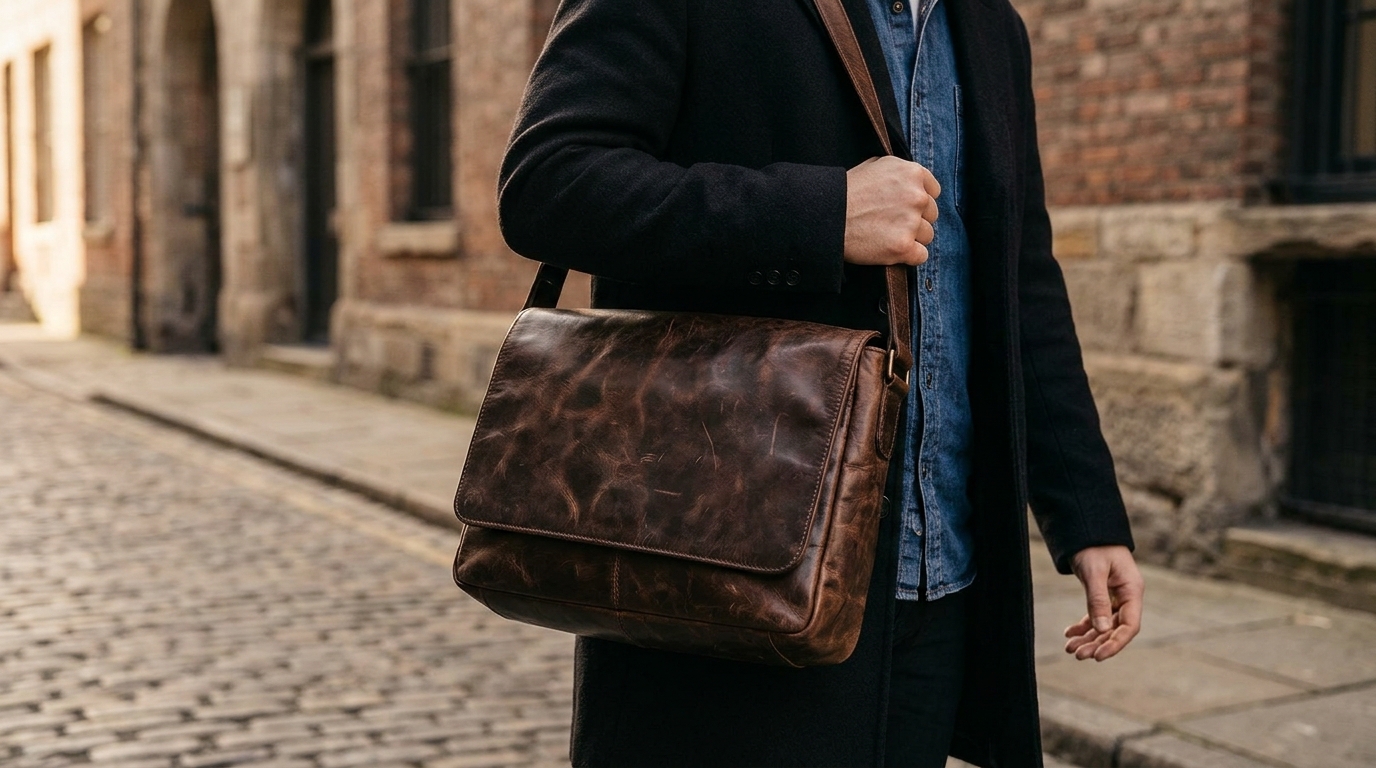
Full-grain leather is the highest quality grade of leather, retaining the natural grain and unique markings of the hide. Unlike corrected or bonded leathers, it does not have a synthetic coating that masks its surface. This natural structure allows the material to react to light, friction, and moisture, creating a unique visual history that mass-produced materials cannot replicate.
1. Patina Formation Through Oxidation
Patina is the gradual darkening and softening of leather caused by exposure to air and light. As the natural oils in the leather interact with oxygen, the surface deepens in color. This process is not a sign of aging in a negative sense, but rather a sign of the material maturing. The result is a rich, warm tone that is unique to each individual piece.
2. Surface Softening and Molding
Leather fibers relax and mold to the shape of the items they carry. Over time, the rigid structure of the hide becomes more pliable. This allows the bag or accessory to fit the user's habits and the specific weight of its contents. The material remembers the shapes it holds, creating a personalized fit that improves with use.
3. Development of Natural Creases
Creases form at stress points where the leather bends repeatedly. These lines appear at handles, corners, and fold lines. Rather than looking like damage, these creases often look like intentional design elements. They add depth and dimension to the surface, breaking up the flatness of a new piece.
4. Light Reflection Changes
The way light interacts with the surface shifts as the leather ages. New leather often has a uniform, matte, or slightly glossy finish. As the surface softens and oils redistribute, the reflection becomes more complex. Some areas may become slightly glossier while others remain matte, creating a dynamic interplay of light and shadow.
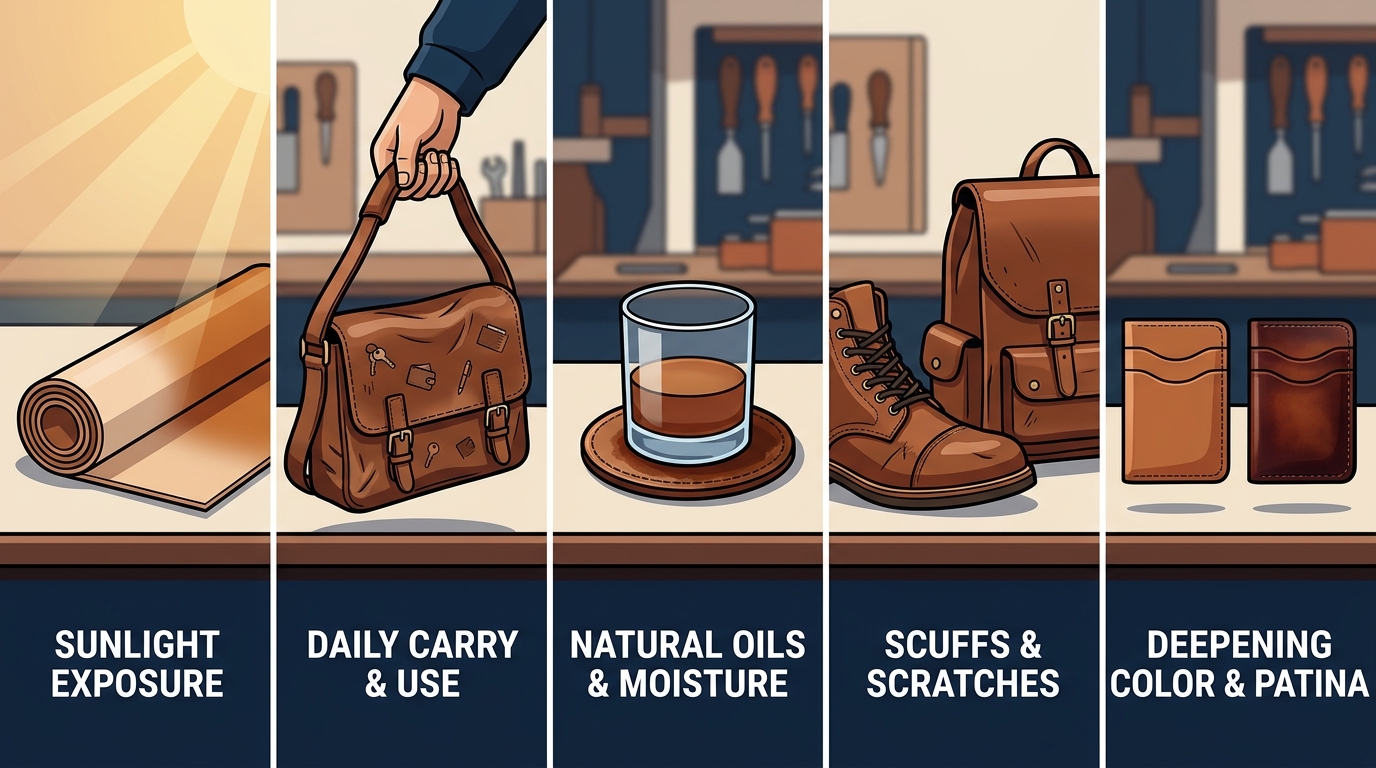
5. Color Deepening in High-Friction Areas
Areas that experience the most friction often darken faster than the rest of the piece. Handles, straps, and edges that are frequently touched or rubbed will develop a deeper color. This contrast between high-use and low-use areas highlights the history of the object. It tells a story of how the item was actually used in daily life.
6. Edge Wear and Burnishing Evolution
Edges of the leather may soften and change texture over time. While initial burnishing creates a smooth, sealed edge, daily use can slightly alter this finish. The edges may become softer to the touch and slightly less rigid. This evolution is a natural part of the material's lifecycle and contributes to the overall tactile experience.
7. Absorption of Environmental Elements
Leather can absorb moisture and dry out, affecting its texture and color. Exposure to humidity or rain can temporarily darken the leather. As it dries, it may leave subtle marks or changes in texture. Proper care can manage this, but some environmental interaction is inevitable and adds to the unique character of the piece.
Choosing the Right Leather for Your Lifestyle
When selecting a leather good, consider how you plan to use it. If you want a piece that will develop a heavy, dark patina, choose a lighter color. If you prefer a more subtle change, a darker leather may be a better fit. Understanding these processes helps you appreciate the evolution of your investment. USA Heritage Craft focuses on full-grain leather goods that are built to age with this kind of character in mind.
Frequently Asked Questions
Does full-grain leather always get darker?
Generally, yes. Most full-grain leathers will darken slightly as they oxidize and absorb natural oils from the user's hands. The rate and extent of darkening depend on the specific tanning process and the color of the hide.
Can I reverse the patina on my leather bag?
No, patina is a permanent change to the leather's surface. You can clean the leather to remove dirt or stains, but you cannot return it to its original factory-fresh color. This permanence is what makes patina valuable to collectors.
Is cracking a sign of bad leather?
Cracking is usually a sign of neglect, not poor quality. If leather is not conditioned regularly, it can dry out and crack. Regular conditioning with a suitable product prevents this and keeps the leather supple.
How long does it take for patina to develop?
Visible changes can occur within weeks of regular use. Significant patina development typically takes several months to a year. The timeline varies based on how often the item is used and the environment it is exposed to.
Does rain ruin full-grain leather?
Rain can temporarily darken leather, but it does not necessarily ruin it. If the leather is allowed to dry naturally at room temperature, it will usually return to its normal state. Avoid using heat to dry wet leather, as this can cause damage.