
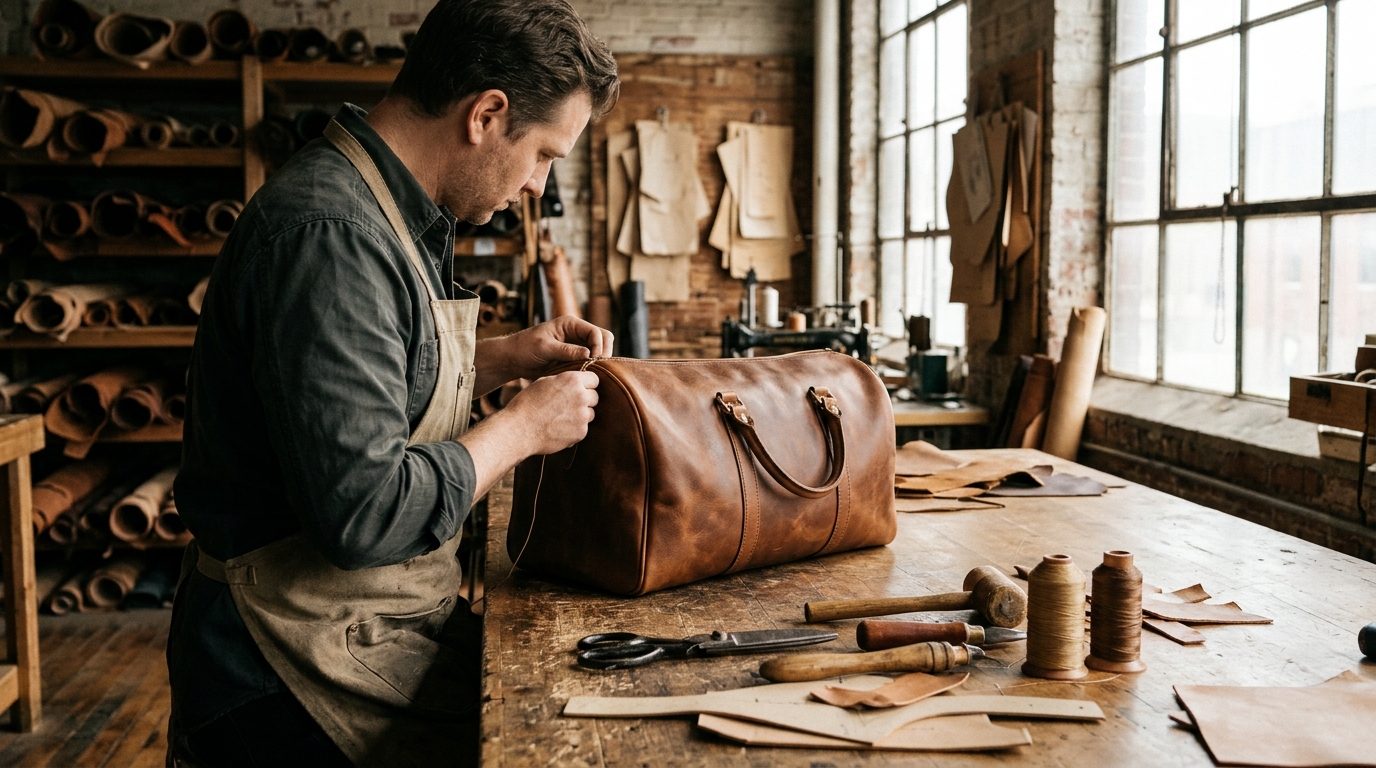
Identifying a truly handcrafted full-grain leather carryall requires looking beyond surface aesthetics to examine construction methods and material integrity. USA Heritage Craft curates small-batch pieces that prioritize traditional techniques over mass-production speed. This guide outlines the specific markers that distinguish heirloom-quality leather goods from disposable fast-fashion alternatives.
1. Visible Hand-Stitching and Saddle Stitching
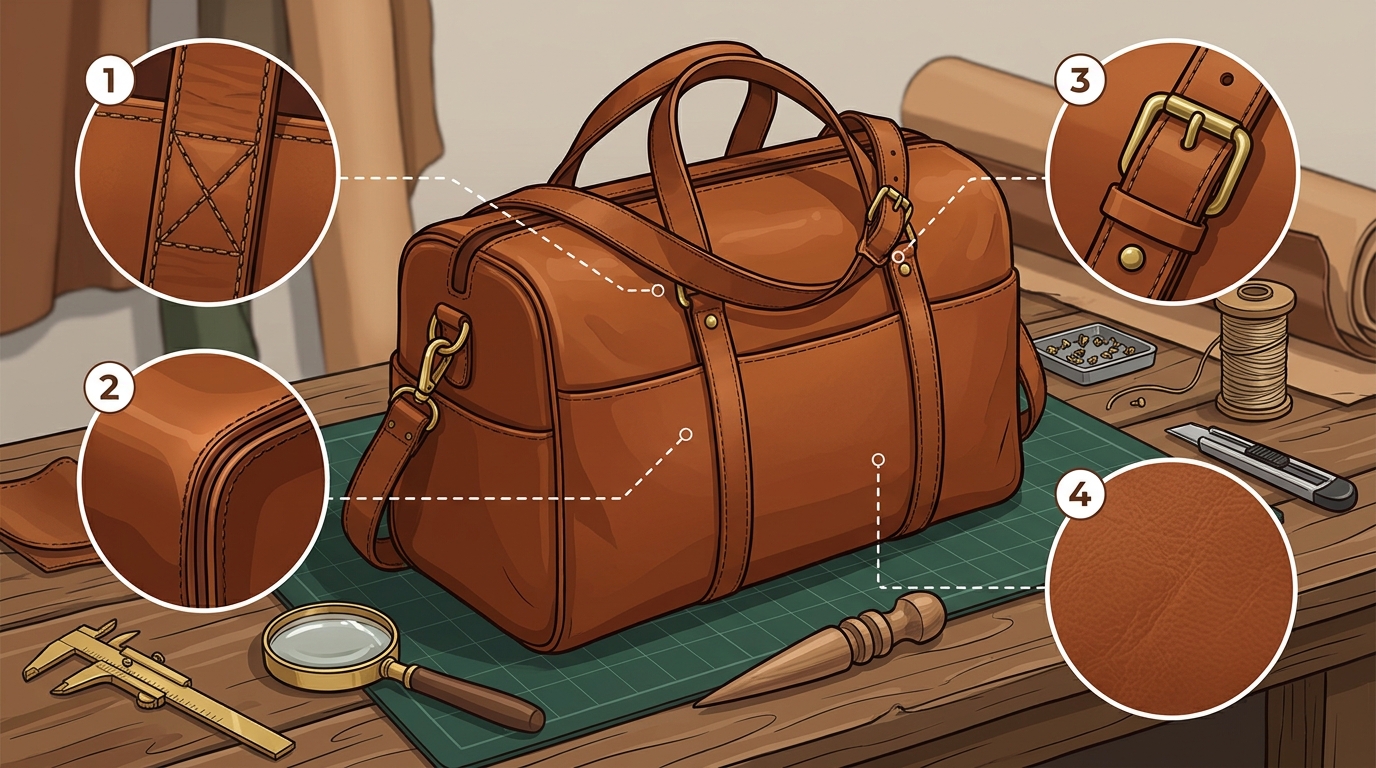
Hand-stitching is the primary indicator of artisanal labor and structural integrity. Machine stitching uses a single thread that can unravel if one point fails, whereas hand-stitching typically employs a saddle stitch with two needles. This method ensures that if one thread breaks, the other holds the seam together. You should look for slight irregularities in stitch spacing, which confirm human placement rather than automated precision.
2. Full-Grain Leather Without Coatings
Full-grain leather is the top layer of the hide, retaining its natural grain and strength. Unlike top-grain or split leather, full-grain is not sanded down to remove imperfections or coated with synthetic finishes. This allows the material to breathe and develop a unique patina over time. If the leather feels plasticky or has a uniform, artificial sheen, it is likely coated and will crack rather than age gracefully.
3. Burnished and Beveled Edges
Burnished edges are a hallmark of meticulous finishing and long-term durability. This process involves sealing and smoothing the leather edges using heat, moisture, and specialized tools to create a hard, glossy finish. A properly burnished edge is not just aesthetic; it prevents the raw leather from fraying and absorbing moisture. Mass-produced bags often have painted or rough edges that peel or chip after minimal use.
4. Machined Hardware and Reinforced Attachment
Premium hardware is machined from solid metal and attached with reinforced stitching or rivets. Stamped hardware is thin and prone to bending or breaking under the weight of a loaded carryall. Look for hardware that feels substantial and is secured with multiple points of attachment. The connection between the leather and the metal should be seamless, with no gaps or loose threads that could lead to failure.
5. Small-Batch Production and Artisan Provenance
Small-batch production is a commitment to quality control and artisan accountability. When a piece is made in small quantities, the maker’s reputation is bound to every item that leaves the workshop. This approach contrasts with mass production, which prioritizes volume and speed. USA Heritage Craft emphasizes that handcrafted work represents intentionality, where every decision reflects the craftsperson’s knowledge and commitment to excellence.
6. Natural Patina Development
Natural patina is the visual evidence of a leather bag’s life and usage history. Full-grain leather softens, molds to its user, and deepens in color as it is used. This aging process is a feature, not a flaw, indicating that the material is organic and uncoated. Bags designed for planned obsolescence do not develop character; they simply degrade. A high-quality carryall should look better after a decade of use than it did on day one.
7. Comprehensive Care and Maintenance Support
Proper care is essential for preserving the longevity of full-grain leather goods. Leather naturally loses internal oils over time, requiring periodic conditioning to prevent drying and cracking. High-quality makers often recommend a wax-free formula that conditions deeply without leaving an oily residue or darkening the hide. The availability of specific, high-quality care instructions signals that the manufacturer understands the long-term needs of the material.
Choosing the Right Carryall
When selecting a handcrafted full-grain leather carryall, prioritize construction quality over brand name alone. Look for visible evidence of hand-stitching, burnished edges, and uncoated leather. USA Heritage Craft offers a curated selection of small-batch pieces built for professionals who value durability and heritage. To find a style that fits your specific needs, explore the collections or contact our team for personalized guidance.
Frequently Asked Questions
What is the difference between full-grain and top-grain leather?
Full-grain leather is the outermost layer of the hide, retaining its natural grain and imperfections, while top-grain leather is sanded to remove surface flaws. Full-grain is stronger and develops a patina, whereas top-grain is often coated and less durable over time.
Why is hand-stitching better than machine stitching?
Hand-stitching, specifically saddle stitching, uses two needles and a single thread, creating a seam that is self-reinforcing. If one thread breaks, the other holds the seam, whereas machine stitching uses a single thread that can unravel completely if cut or broken.
How should I care for a full-grain leather carryall?
Apply a wax-free leather conditioner periodically to replenish natural oils and prevent drying. Avoid using products with animal fats or caustic chemicals, which can darken the leather or weaken the stitching. Store the bag in a cool, dry place when not in use.
Are small-batch leather bags more expensive than mass-produced ones?
Yes, small-batch bags typically cost more due to the labor-intensive handcrafting process and premium materials. However, they are designed to last decades, offering a lower cost per year of use compared to cheap bags that need frequent replacement.
Where are USA Heritage Craft bags made?
All bags sold by USA Heritage Craft are made in the USA by artisans who specialize in traditional leatherworking techniques. The company curates only premium, USA-made, full-grain leather goods to ensure quality and heritage.