
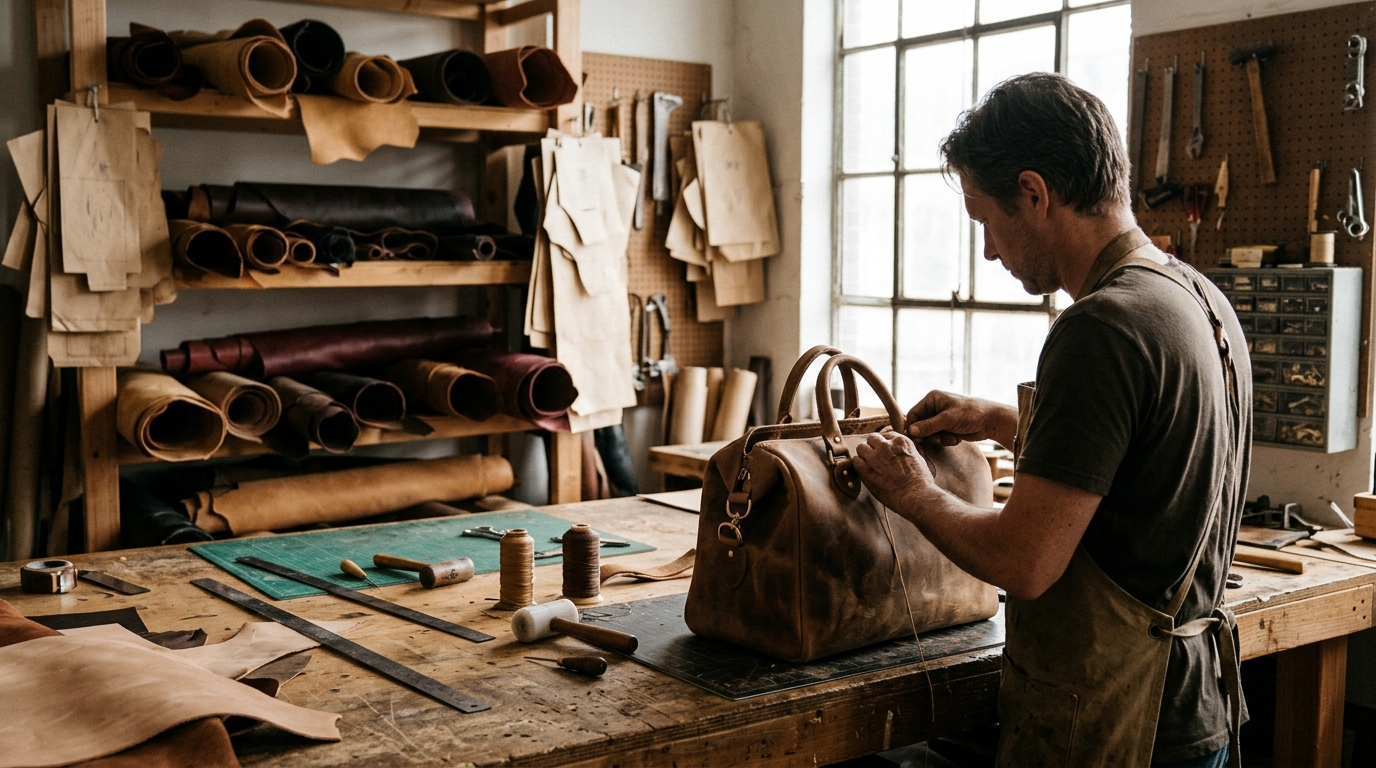
Small-batch full-grain carryall bags are handcrafted through a sequence of deliberate, labor-intensive steps that prioritize material integrity and structural longevity over speed. The process begins with selecting premium hides and ends with a rigorous final inspection. USA Heritage Craft curates these pieces to ensure every stitch and edge reflects traditional American craftsmanship. Understanding the making process helps you distinguish heirloom-quality goods from mass-produced alternatives.
Material Selection and Hide Quality
The foundation of a durable bag is the hide itself. Full-grain leather is the top layer of the hide, retaining the natural grain and all its unique characteristics. Unlike corrected or top-grain leathers, full-grain hides are not sanded down to remove imperfections. This preservation allows the leather to develop a rich patina over time. When evaluating a bag, look for a hide that feels substantial and displays natural markings. These marks are evidence of authenticity, not defects. Mass-produced goods often use coated synthetics or corrected leathers that mask inferior quality. A true full-grain hide breathes and ages gracefully, becoming softer and more characterful with use.
Cutting and Preparation
Once the hide is selected, the craftsperson must cut the panels with precision. This step requires a deep understanding of how the leather will behave under tension. The cutter must account for the natural stretch and grain direction of the hide. In small-batch production, each piece is cut by hand, ensuring that the best parts of the hide are used for high-stress areas. This attention to detail prevents weak points in the final product. The panels are then prepared for stitching, which involves punching holes with specialized tools. This preparation ensures that the thread will pass through the leather cleanly, creating a strong and uniform seam.
Stitching and Construction Techniques
Finishing and Edge Treatment
The finishing phase is where a good piece becomes a great one. Edges are burnished, a process that seals and smooths the leather using heat, moisture, and specialized tools. A properly burnished edge has a subtle sheen and feels smooth to the touch. This treatment prevents the edges from fraying and adds to the overall aesthetic of the bag. Finishing also involves applying natural oils and waxes to condition the leather. These products enhance the color and protect the surface from moisture. The craftsperson makes intentional decisions about the final finish, considering how the piece will age. Some bags receive a high polish, while others are left with a natural, matte look. This final step ensures that the bag is not only functional but also beautiful.
Final Inspection and Quality Control
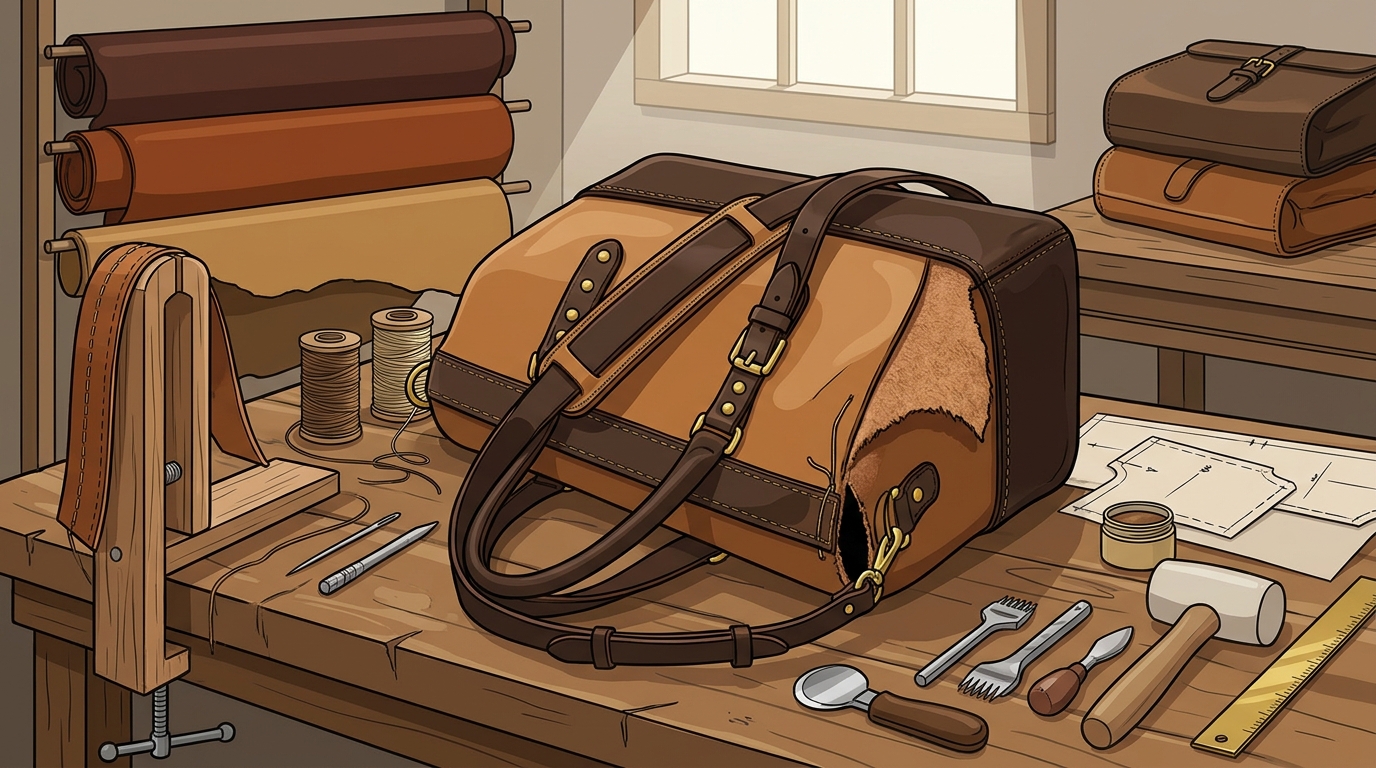
The final inspection is thorough and uncompromising. Every stitch is examined, and every edge is felt. The craftsperson scrutinizes the entire surface for any flaws that might have been missed. Only pieces that meet exacting standards leave the workshop. This commitment to excellence at every stage is what transforms a functional object into a cherished heirloom. In small-batch production, the maker's reputation is bound to every piece that leaves their workshop. There are no shortcuts or compromises made for the sake of efficiency. This level of quality control is rare in mass production, where speed often takes precedence over perfection.
Key Takeaways
- Full-grain leather is the top layer of the hide, retaining natural grain and aging with a rich patina.
- Hand-stitching uses two needles and a waxed thread, creating a redundant seam that is stronger than machine stitching.
- Burnished edges are sealed and smoothed using heat and moisture, preventing fraying and adding aesthetic value.
- Small-batch production allows for greater attention to detail and quality control at every stage of the making process.
- The final inspection ensures that every stitch and edge meets exacting standards before the bag leaves the workshop.
- Choosing handcrafted goods supports traditional American craftsmanship and sustainability by creating items that last for generations.
Frequently Asked Questions
What is the difference between full-grain and top-grain leather?
Full-grain leather is the top layer of the hide, retaining the natural grain and all its unique characteristics. Top-grain leather is sanded down to remove imperfections, resulting in a smoother but less durable material. Full-grain leather ages better and develops a patina over time.
Why is hand-stitching stronger than machine stitching?
Hand-stitching, such as saddle stitching, uses two needles and a waxed thread. If one thread breaks, the other holds the seam together. Machine stitching uses a single thread, so if it breaks, the seam fails completely. This redundancy makes hand-stitching significantly stronger and more durable.
What is burnishing in leatherwork?
Burnishing is a process where the edges of the leather are sealed and smoothed using heat, moisture, and specialized tools. This treatment prevents the edges from fraying and adds a subtle sheen, enhancing the overall aesthetic and durability of the bag.
How long does it take to handcraft a small-batch bag?
The time required to handcraft a bag varies depending on its complexity, but it generally takes significantly longer than mass-produced alternatives. The process involves multiple stages, including cutting, stitching, and finishing, each of which requires careful attention and time. This labor-intensive approach ensures that the final product is of the highest quality.
Why do small-batch bags cost more than mass-produced ones?
Small-batch bags cost more because they are made using premium materials and traditional techniques that take significantly longer to execute. The labor involved in hand-stitching and finishing is more expensive than machine production. Additionally, the use of full-grain leather and rigorous quality control adds to the cost. However, the longevity and durability of these bags make them a better long-term investment.
How should I care for a full-grain leather bag?
To care for a full-grain leather bag, use a high-quality leather conditioner regularly to keep the leather supple and prevent it from drying out. Clean the bag with a soft cloth and avoid exposing it to excessive moisture or direct sunlight. Proper care will help the bag develop a rich patina and last for decades.
Explore the Craft
Understanding the handcrafting process helps you appreciate the value of a well-made bag. USA Heritage Craft curates premium, USA-made, full-grain leather bags that reflect this dedication to quality. To see the craftsmanship in action, explore our About our Craft page. You can also learn how to maintain your investment on our Leather Care guide. Browse our Collections to find a bag that fits your style and needs. If you have questions about a specific piece, contact our team for personalized assistance.