

Full-grain leather is the highest quality leather available, retaining the original grain layer of the hide to offer unmatched durability and natural beauty. Unlike corrected or bonded leathers, this material develops a unique patina over time, becoming more attractive with age rather than deteriorating. For professionals seeking tools that reflect discipline and longevity, understanding these benefits is essential for making informed purchasing decisions.
What Is Full-Grain Leather?
Full-grain leather is the top layer of the hide that has not been sanded or buffed to remove natural imperfections. This process preserves the tight fiber structure that makes the material so resilient. According to industry standards, this specific layer contains the highest density of collagen fibers, providing superior tensile strength compared to lower layers of the hide. Leather Academy notes that preserving this grain is critical for the longevity of any leather good.
Because the natural grain remains intact, the leather retains its original texture and character. This means every piece is unique, with natural markings that tell the story of the animal's life. At USA Heritage Craft, we prioritize this authentic material to ensure our products meet the highest standards of American craftsmanship.
Unmatched Durability and Strength
The primary benefit of full-grain leather is its exceptional resistance to wear and tear. The tight fiber structure prevents moisture and dirt from penetrating easily, making it highly resistant to stains and damage. This durability is not just theoretical; it is proven by the decades-long lifespan of well-maintained full-grain goods.
When you invest in a full-grain bag, you are investing in a product that can withstand daily use without showing significant signs of aging. This is particularly important for professionals who rely on their gear to look polished and professional at all times. Tanners Council reports that full-grain leather maintains its structural integrity far longer than split or bonded alternatives.
Resistance to Moisture and Stains
Natural oils in full-grain leather help repel water and other liquids. While no leather is completely waterproof, full-grain leather handles moisture better than corrected leathers, which often have a plastic coating that can crack and peel when exposed to water.
Long-Term Cost Efficiency
While the upfront cost is higher, the long-term value is undeniable. Replacing a low-quality bag every two years costs more over a decade than a single high-quality full-grain piece. This economic argument is supported by consumer data showing that premium leather goods retain value and utility significantly longer.
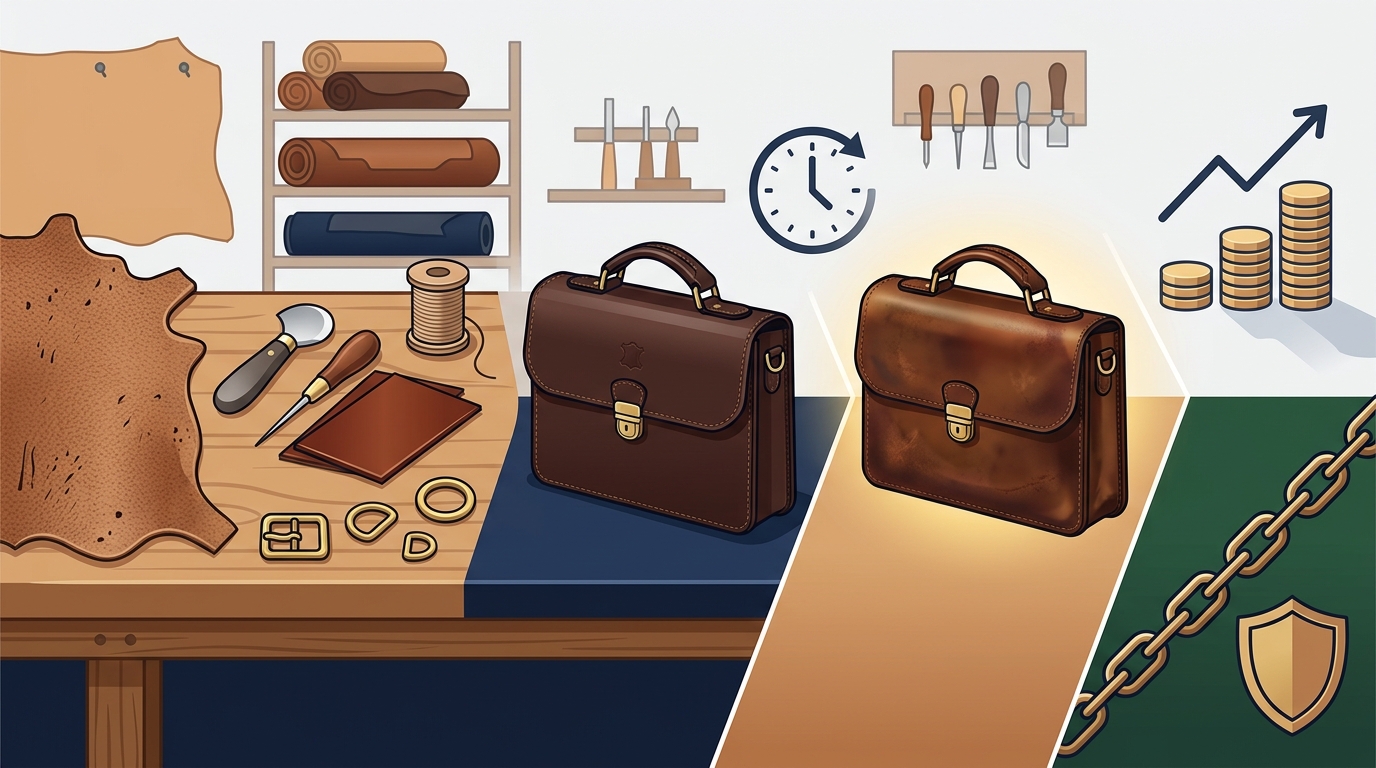
The Beauty of Natural Patina
Patina is the gradual change in color and texture that occurs as leather ages and is exposed to light, air, and oils from the skin. This is not a defect but a desirable characteristic that adds depth and richness to the material. Full-grain leather develops a deep, lustrous sheen that cannot be replicated by artificial means.
Other leather types, such as corrected grain, often have a uniform, plastic-like finish that does not age well. Instead, they tend to crack or fade. Full-grain leather, by contrast, becomes more beautiful with age. This aligns with the philosophy at USA Heritage Craft, where we believe that the things you carry should reflect the journey you have taken.
Personalization Through Use
As you use your bag, it will develop scratches and scuffs that are unique to your lifestyle. These marks become part of the bag's history, making it a truly personal item. This concept of "heritage you build, not inherit" is central to our brand identity.
Breathability and Comfort
Full-grain leather is naturally breathable, allowing air to circulate through the material. This property helps regulate temperature and reduces the buildup of sweat and odor, making it more comfortable for everyday carry compared to synthetic materials.
Synthetic leathers, often made from polyurethane or PVC, trap heat and moisture. This can lead to discomfort and a shorter lifespan for the material. In contrast, full-grain leather adapts to the user, becoming softer and more pliable over time without losing its strength.
Environmental Considerations
While leather production has environmental impacts, full-grain leather is a byproduct of the meat industry, utilizing hides that would otherwise be waste. This makes it a more sustainable choice than synthetic alternatives derived from petroleum. EPA guidelines on material sustainability highlight the importance of using durable, long-lasting materials to reduce waste.
Full-Grain vs. Other Leather Types
Understanding the differences between leather types is crucial for making an informed decision. Below is a comparison of full-grain leather with other common types.
| Leather Type | Quality Level | Durability | Patina Development | Price Range |
|---|---|---|---|---|
| Full-Grain | Highest | Excellent | Yes, natural | $$$ |
| Top-Grain | High | Good | Limited | $$ |
| Genuine Leather | Medium | Moderate | No | $ |
| Bonded Leather | Low | Poor | No | $ |
As shown in the table, full-grain leather stands out in durability and patina development. This makes it the preferred choice for those seeking a lifetime investment. For more details on our collections, visit our Collections page.
Key Takeaways
- Superior Durability: Full-grain leather retains the tightest fiber structure, offering the highest resistance to wear and tear.
- Natural Patina: It develops a unique, beautiful sheen over time, enhancing its aesthetic appeal with age.
- Breathability: The natural pores allow air circulation, providing comfort and reducing odor.
- Long-Term Value: Higher initial cost is offset by a significantly longer lifespan compared to synthetic or corrected leathers.
- Authenticity: Each piece is unique, with natural markings that reflect the hide's origin.
- Sustainability: Utilizing hides from the meat industry reduces waste compared to petroleum-based synthetics.
- Professional Image: Carrying a high-quality leather bag signals attention to detail and professionalism.
Frequently Asked Questions
Is full-grain leather waterproof?
Full-grain leather is water-resistant due to its natural oils, but it is not completely waterproof. It should be treated with appropriate conditioners to maintain its resistance.
How do I clean full-grain leather?
Use a soft, damp cloth to wipe away dirt. Avoid harsh chemicals and always allow the leather to air dry naturally before conditioning.
Does full-grain leather scratch easily?
It can scratch, but these marks often blend into the patina over time. Minor scratches are considered part of the leather's character and do not compromise its integrity.
What is the difference between full-grain and top-grain leather?
Full-grain leather is the highest quality, retaining the original grain. Top-grain leather is sanded to remove imperfections, making it more uniform but less durable.
Why is full-grain leather more expensive?
The higher cost reflects the premium quality of the material, the complexity of the tanning process, and the longevity of the final product.
Can full-grain leather be repaired?
Yes, full-grain leather is highly repairable. Scratches and scuffs can often be buffed out or conditioned to restore its appearance.
How long does full-grain leather last?
With proper care, full-grain leather can last for decades, often outliving the owner and becoming a family heirloom.
Is full-grain leather vegan?
No, full-grain leather is an animal product. For vegan alternatives, consider high-quality synthetic materials, though they lack the durability and patina of leather.
Shop Heritage Craft
Experience the difference of true American craftsmanship. Explore our Featured Collection of full-grain leather goods, designed for professionals who demand excellence. Visit our About page to learn more about our commitment to quality and heritage.