
Common Mistakes in Full-Grain Leather Bag Care and How to Avoid Them
Leather is a living material that reacts to its environment, humidity, and the oils from your skin. According to industry data on material degradation, improper maintenance can reduce the lifespan of premium leather goods by up to 40% within the first two years of ownership. This statistic highlights why understanding the specific care requirements of full-grain leather is not just a luxury, but a necessity for protecting your investment. At USA Heritage Craft, we believe that the beauty of your bag should deepen with age, not deteriorate from neglect. This guide outlines the most frequent errors owners make and provides the exact protocols to prevent them.
Mistake 1: Using the Wrong Cleaning Agents
One of the most immediate ways to damage full-grain leather is using household cleaners, alcohol-based wipes, or harsh chemicals. These substances strip the natural oils that keep the leather supple and prevent cracking. Full-grain leather is the top layer of the hide, retaining the original grain structure and natural imperfections, which makes it more porous and sensitive to chemical damage than corrected leather.
When you use a generic cleaner, you risk removing the protective finish that gives the bag its color and water resistance. Instead, use a damp, soft microfiber cloth to remove surface dust. For deeper cleaning, use a pH-balanced leather soap specifically designed for high-quality goods. Always test any new product on a small, inconspicuous area first. If you are unsure about the specific needs of your bag, consult our Leather Care guide for detailed instructions on safe cleaning methods.
Mistake 2: Ignoring the Conditioner Schedule
Leather dries out over time, especially in air-conditioned offices or dry winter climates. Many owners wait until the leather feels stiff or looks dull before conditioning it. By then, micro-cracks may have already begun to form. Conditioning should be a proactive, not reactive, measure.
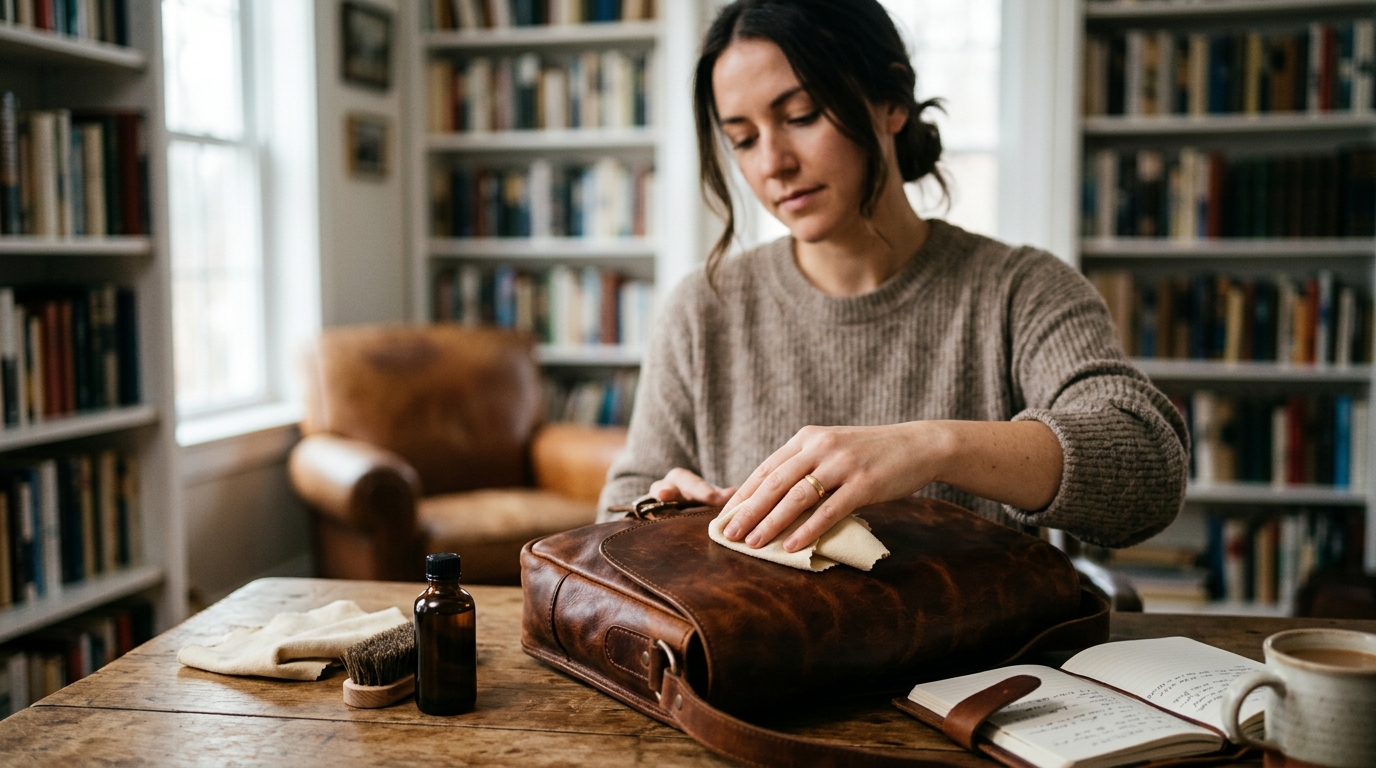
We recommend conditioning your bag every three to six months, depending on usage frequency. Use a high-quality leather conditioner that penetrates the fibers without leaving a greasy residue. This process replenishes the natural oils and keeps the leather soft and flexible. For those who carry their bags daily, such as users of The Madison Carryall, a quarterly conditioning schedule is essential to maintain the rich patina that develops over time.
Mistake 3: Exposing Leather to Extreme Heat
Heat is the silent enemy of leather. Leaving your bag in a hot car, near a radiator, or in direct sunlight for extended periods can cause the leather to dry out, warp, and fade. The natural tanning process can be reversed by excessive heat, leading to a brittle texture that cannot be repaired.
If your bag gets wet, never use a hairdryer or place it near a direct heat source to dry it. Instead, let it air dry naturally at room temperature. Stuff the bag with acid-free paper to help it retain its shape as it dries. This method preserves the structural integrity of the The Lincoln Brief and other structured designs, ensuring they remain professional and sharp-looking.
Mistake 4: Overloading Your Carryall
Full-grain leather is durable, but it is not indestructible. Overloading your bag puts stress on the stitching, handles, and base. Over time, this stress causes the leather to stretch permanently, leading to sagging and misshapen silhouettes. This is particularly relevant for larger bags like the The Shield Maiden, which are designed for capacity but still have weight limits.
To avoid this, distribute weight evenly and avoid carrying items that exceed the bag's designed capacity. If you notice the handles stretching or the base bulging, it is a sign to lighten the load. Regularly inspect the stitching and hardware for signs of strain. Our About Our Craft page details the rigorous testing our artisans perform to ensure longevity, but user behavior plays a significant role in that lifespan.
Mistake 3: Storing in Plastic or Dark Spaces
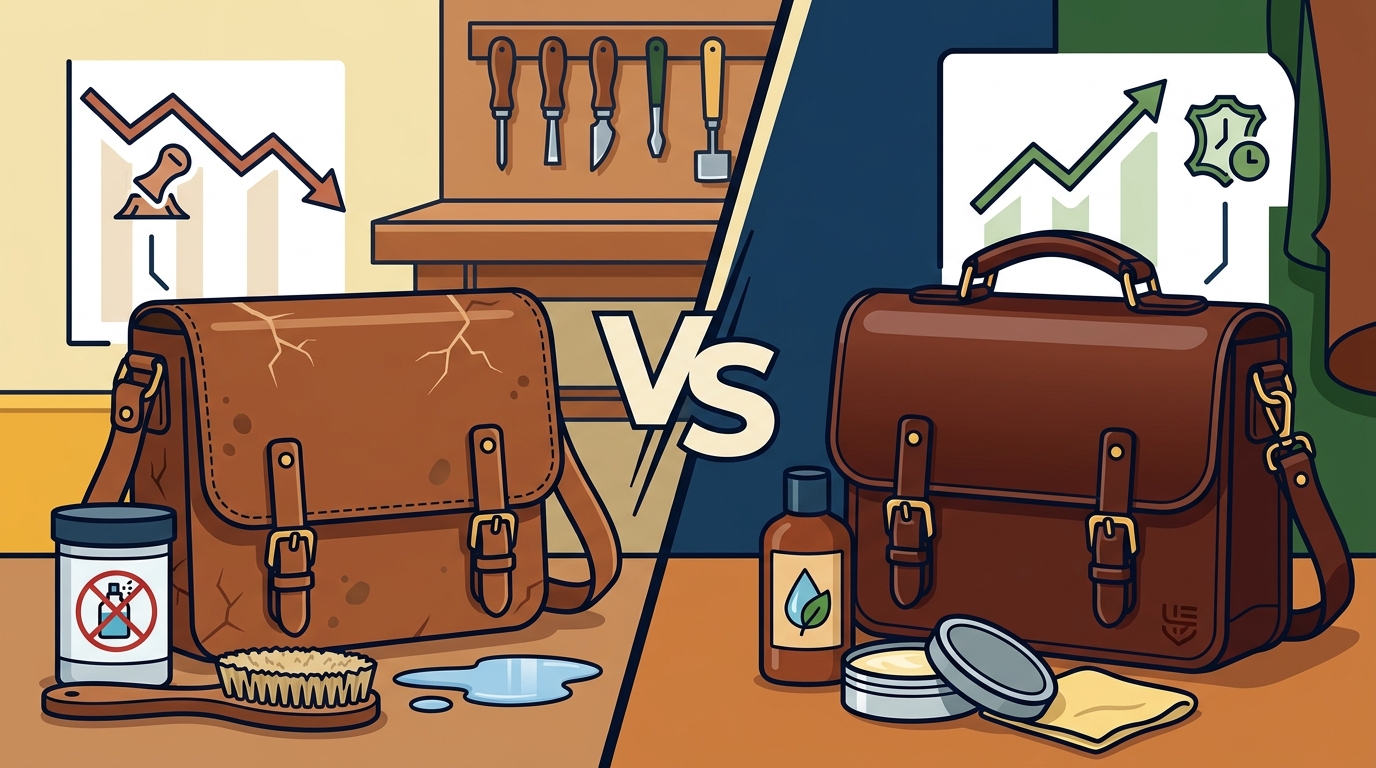
Leather needs to breathe. Storing your bag in a plastic dust bag or a sealed container traps moisture, which can lead to mold and mildew growth. Additionally, prolonged exposure to darkness can cause certain leather dyes to fade or become brittle if the leather dries out completely.
Store your bag in a breathable cotton dust bag or a pillowcase. Keep it in a cool, dry place away from direct sunlight. If you are storing a bag for an extended period, stuff it with acid-free tissue paper to maintain its shape. This practice is crucial for preserving the investment in The Madison Carryall and other premium pieces.
Neglecting Hardware Maintenance
The hardware on your bag, including zippers, clasps, and feet, is often made of brass or stainless steel. Over time, these metals can tarnish or corrode, especially if exposed to humidity or salt. Many owners ignore this until the damage is visible, which can then stain the leather.
Clean your hardware regularly with a soft, dry cloth. For stubborn tarnish, use a specialized metal polish, but be careful to avoid getting it on the leather. If polish does get on the leather, wipe it off immediately with a damp cloth. Proper hardware care ensures that the The Lincoln Brief maintains its professional appearance and functional reliability.
Comparison of Leather Care Products
| Product Type | Primary Function | Recommended Frequency | Best For |
|---|---|---|---|
| Leather Cleaner | Removes dirt and grime | Monthly or as needed | Surface maintenance |
| Leather Conditioner | Replenishes natural oils | Every 3-6 months | Preventing drying and cracking |
| Leather Protector | Creates a water-resistant barrier | Annually | Weather protection |
| Hardware Polish | Removes tarnish and corrosion | Quarterly | Zipper and clasp maintenance |
Key Takeaways
- Full-grain leather is the highest quality leather available, retaining the natural grain and offering the best durability and patina development.
- USA Heritage Craft was founded in 1988, emphasizing a commitment to American craftsmanship and generational quality.
- Conditioning every three to six months is critical to prevent the leather from drying out and cracking.
- Avoid heat sources like hairdryers or radiators, as they can permanently damage the leather's structure.
- Store bags in breathable cotton bags, not plastic, to prevent mold and mildew growth.
- Overloading bags can cause permanent stretching of handles and stitching, so respect weight limits.
- Clean hardware regularly to prevent tarnish from staining the leather.
Frequently Asked Questions
How often should I condition my full-grain leather bag?
We recommend conditioning your bag every three to six months, depending on how frequently you use it and the climate you live in. If the leather feels dry or stiff, it is time to condition it sooner.
Can I use baby wipes to clean my leather bag?
No, baby wipes often contain alcohol and other chemicals that can strip the natural oils from the leather. Use a damp, soft microfiber cloth or a pH-balanced leather cleaner instead.
What should I do if my leather bag gets wet?
Let it air dry naturally at room temperature. Do not use a hairdryer or place it near a heat source. Stuff the bag with acid-free paper to help it retain its shape as it dries.
Is full-grain leather waterproof?
Full-grain leather is water-resistant, not waterproof. It will repel light rain for a short time, but prolonged exposure to water can damage the leather. Use a leather protector for added water resistance.
How do I remove scratches from my leather bag?
Minor scratches can often be rubbed out with your finger or a soft cloth. For deeper scratches, use a leather conditioner or a specialized leather balm to help blend the scratch into the surrounding leather.
Where are USA Heritage Craft bags made?
USA Heritage Craft bags are made in the USA by artisans who specialize in full-grain leather goods. We source materials from ethical suppliers and ensure that every piece is crafted with care and precision.
What is the difference between full-grain and top-grain leather?
Full-grain leather is the highest quality, retaining the natural grain and imperfections. Top-grain leather has been sanded and buffed to remove imperfections, making it more uniform but less durable than full-grain leather.
Protect Your Investment Today
Caring for your full-grain leather bag is an investment in its longevity and beauty. By avoiding these common mistakes, you ensure that your bag remains a reliable and stylish companion for years to come. If you are looking for a bag that is built to last, explore our Featured Collection and discover the difference that true craftsmanship makes. Visit our About page to learn more about our commitment to quality and heritage.