
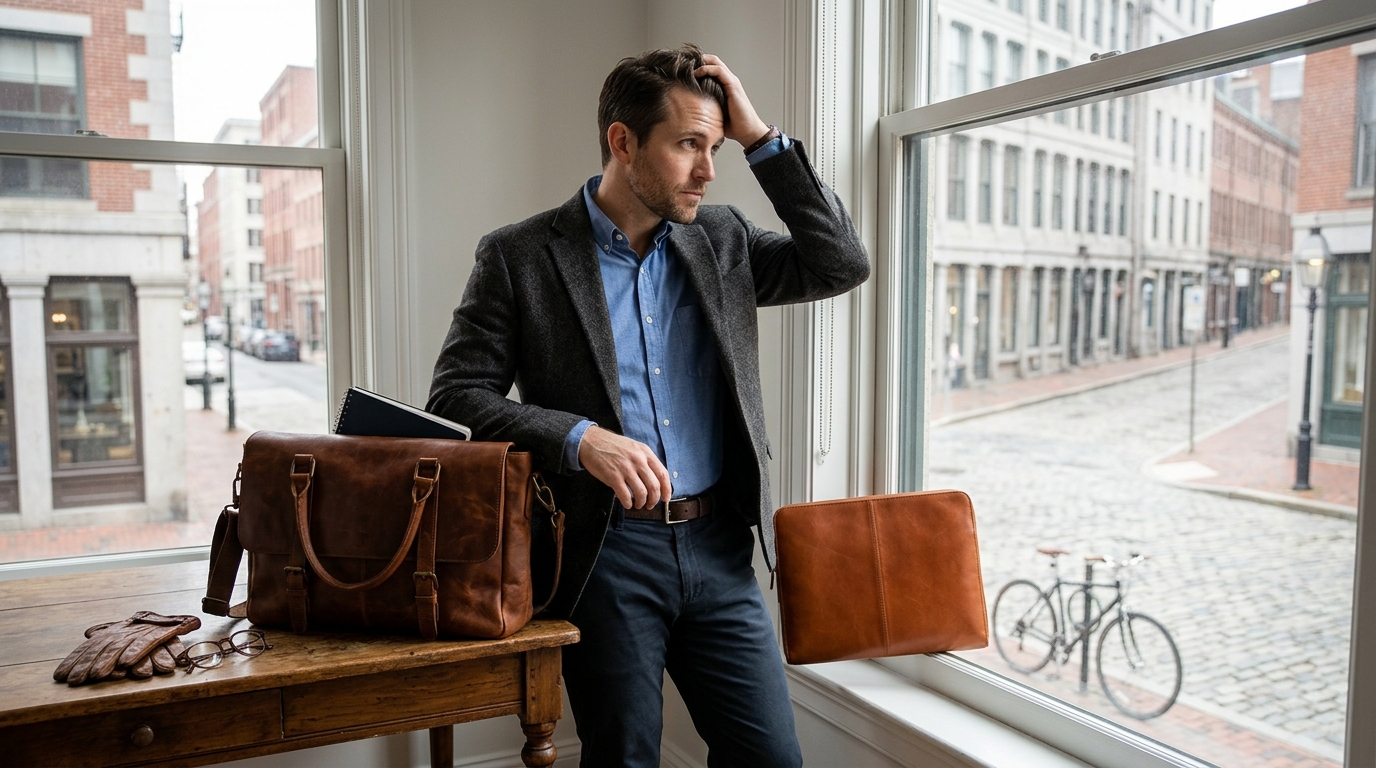
Choosing the perfect leather bag requires matching the material grade, construction method, and size to your daily routine and professional environment. This guide covers quality grades, durability, maintenance, comfort, capacity, and color selection.
Leather Quality Grades
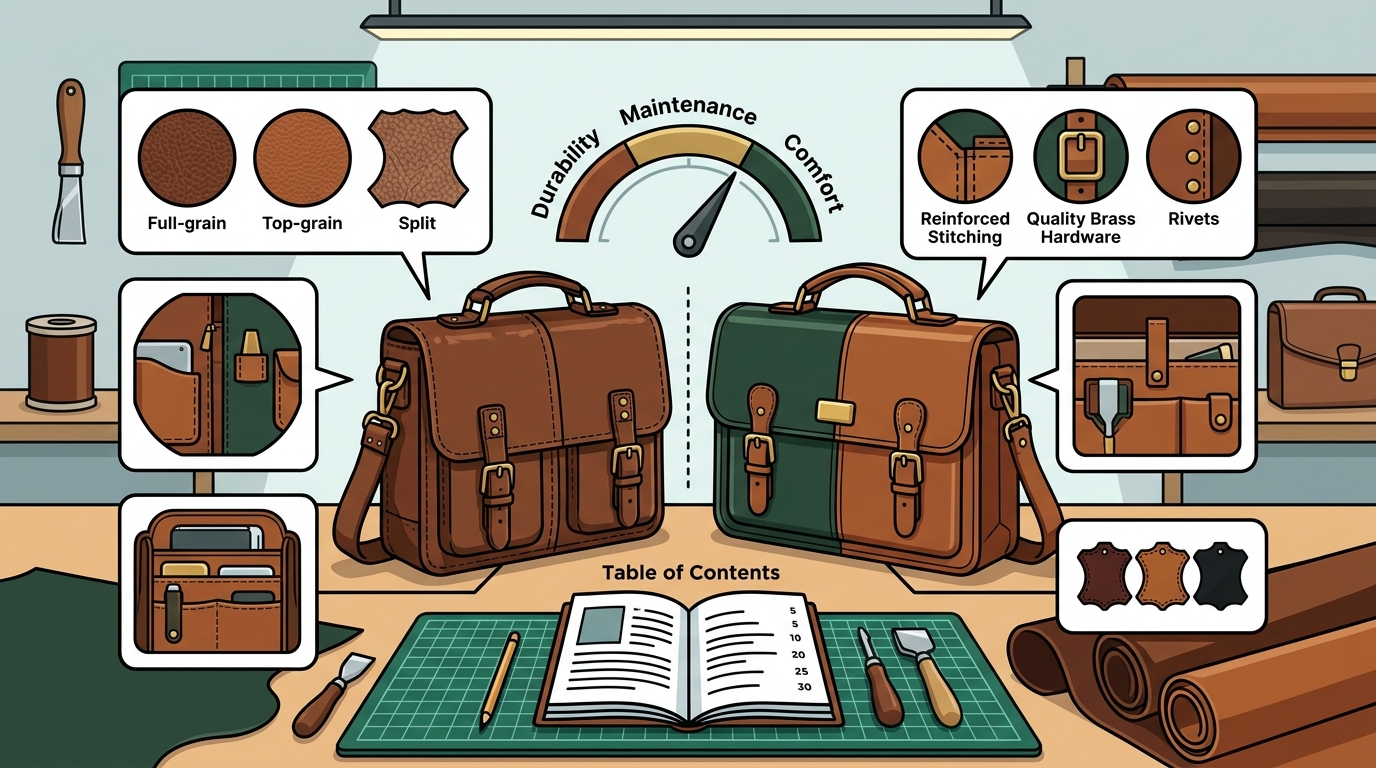
Understanding the hide is the first step in selecting a bag that will age well. Leather quality is determined by the layer of the hide used and the level of processing applied to the surface. The top layer of the hide contains the densest collagen fibers, which provide the structural integrity necessary for heavy loads.
Full-Grain vs. Top-Grain
Full-grain leather is the highest quality grade available. It is made from the outermost layer of the hide and retains the natural grain pattern, including any imperfections from the animal's life. This grade is the most durable and develops a unique patina over time. Top-grain leather is the second layer, where the surface has been sanded to remove imperfections. It is more uniform in appearance but lacks the density and aging characteristics of full-grain.
Corrected Grain and Split Leather
Corrected grain leather is top-grain that has been heavily sanded and embossed with an artificial grain pattern. It is often coated with polyurethane to make it stain-resistant. While affordable, it does not breathe or age gracefully. Split leather is the fibrous layer beneath the top grain. It is softer but less durable and is typically used for linings or lower-cost products. For a bag intended to last a lifetime, full-grain is the only viable option.
Construction and Durability
The way a bag is assembled determines its structural lifespan. Construction techniques vary significantly between mass-produced goods and handcrafted items. The stitching method, hardware quality, and edge finishing all contribute to how the bag withstands daily stress.
Stitching Techniques
Hardware and Edges
Hardware should be machined from solid metal, such as stainless steel or brass, rather than stamped from thin sheet metal. Stamped hardware is prone to bending and breaking under weight. Edge finishing is another critical indicator of quality. Burnished edges are sealed and smoothed using heat and moisture, creating a hard, glossy finish that resists fraying. Unfinished or poorly sealed edges will crack and fray over time.
Color and Maintenance
Leather is a living material that requires periodic care to maintain its integrity. The color of the leather affects how it ages and how much maintenance it demands. Understanding the conditioning process is essential for preserving the bag's appearance.
Conditioning Requirements
Full-grain leather naturally loses its internal oils over time. Without proper conditioning, the hide can dry out, crack, or absorb moisture that leads to swelling. A wax-free conditioner is ideal for full-grain leather because it allows the material to breathe. Conditioners containing animal fats or heavy waxes can darken the leather or leave a greasy residue that attracts dust.
Water and Stain Resistance
Leather is not waterproof, but it is water-resistant. High-quality full-grain leather will bead water on the surface and dry naturally. However, prolonged exposure to rain can cause water spotting. Applying a light coat of conditioner when you first receive the bag helps prevent permanent stains. Regular maintenance ensures the bag looks better with age rather than worse.
Comfort and Fit
A bag is only as good as how it feels on your body. Comfort is determined by the strap design, weight distribution, and the bag's overall shape. A poorly designed bag can cause shoulder strain or back pain during long days of use.
Strap Design and Padding
Weight Distribution
The shape of the bag affects how weight is distributed. A briefcase with a rigid structure holds its shape but may feel stiff. A softer carryall conforms to your body but may sag if overloaded. Consider your daily load. If you carry a heavy laptop and documents, a bag with a reinforced base and wide straps is necessary. If you carry light essentials, a slimmer profile may be more comfortable.
Size and Capacity
Size is a function of your specific needs, not a one-size-fits-all metric. You must evaluate what you carry daily and how you access it. A bag that is too large becomes cumbersome, while one that is too small forces you to leave essentials behind.
Laptop and Document Capacity
Measure your largest device. If you carry a 15-inch laptop, you need a bag with a dedicated padded compartment that fits that size. Some bags fit up to a 17-inch laptop, which provides extra room for tablets or notebooks. Consider whether you need a separate compartment for documents or if a single large compartment is sufficient. Zippered pockets for phones, pens, and business cards add organization without adding bulk.
Everyday Carry Essentials
List your daily essentials. Wallet, keys, phone, water bottle, and notebook are common items. A bag with multiple interior slip pockets and a front gusset pocket offers quick access to these items. Avoid bags with too many small pockets that are difficult to reach. The goal is to find a balance between organization and accessibility.
Color Selection
Color is a personal choice, but it also affects how the bag ages and how it pairs with your wardrobe. Neutral colors are versatile, while bold colors make a statement. The choice of color should align with your professional environment and personal style.
Neutral vs. Bold Colors
Black, brown, and tan are classic neutrals that pair well with almost any outfit. They are forgiving of minor scratches and stains. Bold colors like merlot or navy make a statement and can reflect your personality. Consider your wardrobe. If you wear mostly dark suits, a black or dark brown bag is a safe choice. If you wear lighter colors, a tan or chestnut bag may be more appropriate.
Aging and Patina
Full-grain leather develops a patina over time. Lighter colors show scratches and marks more prominently, while darker colors hide them better. However, the patina is part of the charm. A bag that has been used for years will have a unique character that a new bag cannot replicate. Choose a color that you will enjoy seeing change over time.
Key Takeaways
- Full-grain leather is the highest quality grade and offers the best durability and aging characteristics.
- Hand-stitching with a saddle stitch technique is more durable than machine lockstitching.
- Machined hardware from solid metal is superior to stamped sheet metal.
- Wax-free conditioners are best for full-grain leather as they allow the material to breathe.
- Removable padded straps offer the most versatility and comfort for daily carry.
- Measure your largest device to ensure the bag has adequate capacity.
- Neutral colors are versatile, while bold colors make a statement.
- Regular maintenance is essential for preserving the bag's appearance and integrity.
Frequently Asked Questions
What is the difference between full-grain and top-grain leather?
Full-grain leather is the outermost layer of the hide and retains the natural grain. Top-grain leather is the second layer, where the surface has been sanded to remove imperfections. Full-grain is more durable and ages better.
How often should I condition my leather bag?
Condition your bag when you first receive it and then periodically depending on use and climate. Most bags need conditioning every six to twelve months. If the leather feels dry or stiff, it is time to condition.
Is hand-stitching really better than machine stitching?
Yes. Hand-stitching uses a saddle stitch technique that is more durable. If one strand breaks, the other holds the seam together. Machine stitching uses a lockstitch that can unravel if one point fails.
What size bag do I need for a 15-inch laptop?
You need a bag with a dedicated padded compartment that fits a 15-inch laptop. Some bags fit up to a 17-inch laptop, which provides extra room. Measure your device to ensure a proper fit.
Can I use my leather bag in the rain?
Leather is water-resistant but not waterproof. High-quality full-grain leather will bead water on the surface. Prolonged exposure to rain can cause water spotting. Apply a light coat of conditioner to help prevent stains.
How do I choose the right color for my bag?
Consider your wardrobe and professional environment. Neutral colors like black, brown, and tan are versatile. Bold colors like merlot or navy make a statement. Choose a color that you will enjoy seeing change over time.
Conclusion
Choosing the perfect leather bag is an investment in your daily routine and professional image. By understanding leather quality, construction, maintenance, comfort, size, and color, you can make an informed decision. USA Heritage Craft offers a curated selection of full-grain leather bags designed for professionals who value quality and durability. Explore the collections to find a bag that fits your needs. For more information on how to care for your leather, visit the leather care page. To learn more about our craftsmanship, read about our craft. If you have questions, contact us. Discover the difference with USA Heritage Craft.