
What Makes a Leather Bag Last Decades Instead of Falling Apart in a Year?
Construction quality is the primary determinant of a leather bag's lifespan. Mass-produced bags fail quickly due to weak stitching, synthetic coatings, and poor hardware. Handcrafted bags last decades because they use full-grain leather, reinforced stitching, and premium materials designed to age gracefully rather than degrade. USA Heritage Craft focuses on these specific construction elements to ensure longevity.
The Role of Leather Grade in Longevity
The type of leather used is the foundation of durability. Full-grain leather is the top layer of the hide, retaining the natural grain and density that provides maximum strength. Cheaper bags often use bonded leather or coated synthetics that crack and peel within months. Full-grain leather, by contrast, develops a patina over time, becoming softer and more characterful with use. This material choice is the first line of defense against structural failure.
Stitching Techniques and Structural Integrity
Stitching is the skeleton of the bag. Hand-stitching with waxed thread creates a seam that is significantly stronger than machine stitching. Machine stitching can unravel if one thread breaks, leading to total seam failure. Hand-stitching, particularly saddle stitching, ensures that if one thread breaks, the other holds the seam together. This redundancy is critical for bags that carry heavy loads daily. The rhythm and tension of hand-stitching also ensure consistent quality across the entire piece.
Hardware Quality and Wear Points
Hardware is often the first point of failure in cheap bags. Stamped metal hardware bends, rusts, or snaps under stress. Premium hardware is machined from solid stainless steel or brass, designed to withstand years of opening and closing. Zippers, in particular, should be from reputable manufacturers like YKK, which are known for durability. The connection between hardware and leather must also be reinforced to prevent tearing at the attachment points. These small details determine whether a bag survives a decade or fails in a year.
Finishing and Edge Treatment
Finishing is where craftsmanship meets aesthetics. Edges are burnished, a process that seals and smooths the leather to prevent fraying. This treatment also adds a subtle sheen that indicates quality. Natural oils and waxes are worked into the leather to condition it and enhance its color. The final inspection is thorough, with every stitch and edge examined for defects. This attention to detail ensures that the bag is not only strong but also beautiful as it ages. The finishing phase transforms a functional object into a cherished heirloom.
Mass Production vs. Handcrafted Craftsmanship
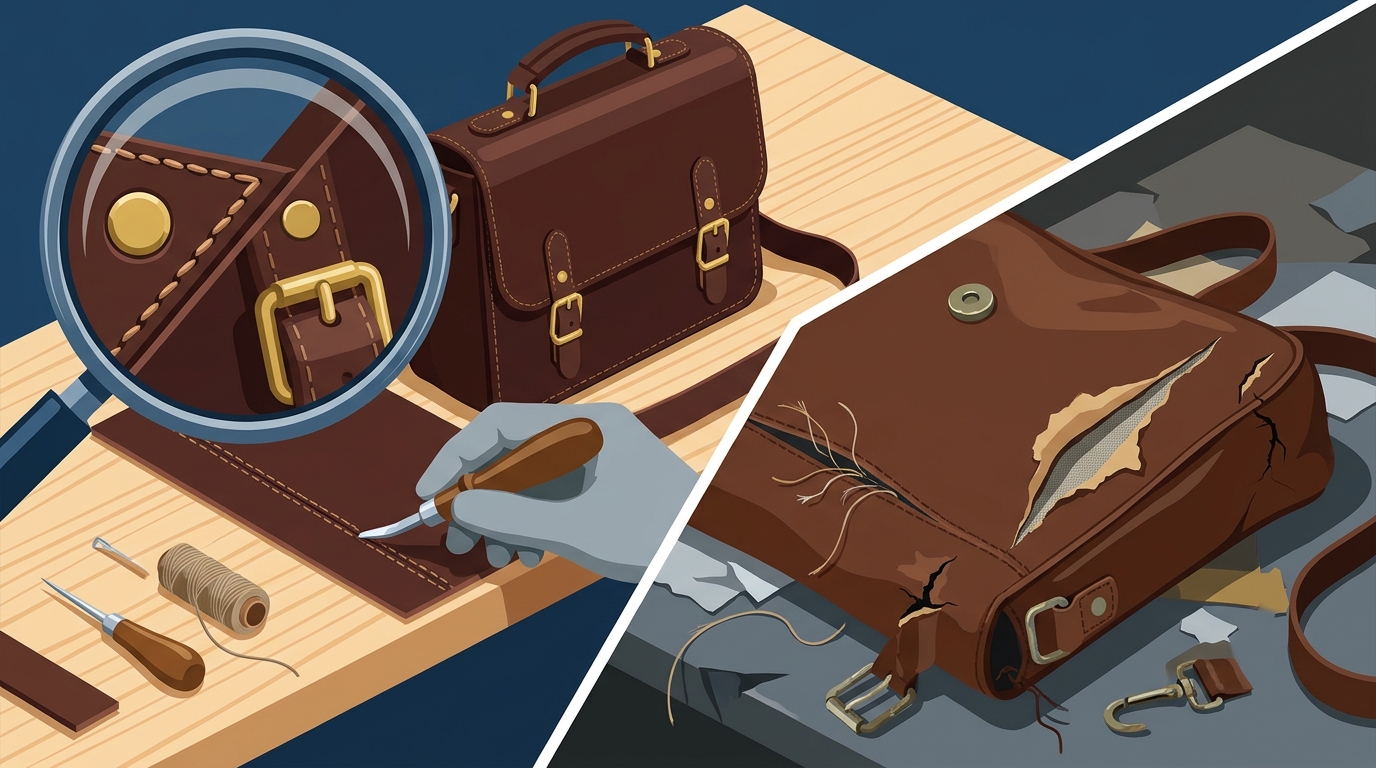
Mass production prioritizes speed and cost over longevity. Cheap bags are designed for planned obsolescence, with materials and construction methods that fail quickly. Handcrafted bags, on the other hand, are built to last. They use traditional techniques that take longer but result in superior durability. The maker's reputation is bound to every piece that leaves the workshop, ensuring a high standard of quality. This difference in philosophy is evident in the bag's performance over time. A handcrafted bag becomes more beautiful with age, while a mass-produced bag becomes landfill.
Key Takeaways
- Full-grain leather is the most durable material, developing a patina over time.
- Hand-stitching, particularly saddle stitching, provides superior seam strength.
- Premium hardware, such as machined stainless steel, prevents early failure.
- Proper edge finishing and burnishing prevent fraying and add aesthetic value.
- Handcrafted bags are built to last decades, unlike mass-produced alternatives.
- Regular care and conditioning extend the life of full-grain leather.
Frequently Asked Questions
What is the difference between full-grain and top-grain leather?
Full-grain leather is the top layer of the hide, retaining the natural grain. Top-grain leather has the outer layer sanded off to remove imperfections, making it less durable but more uniform.
Why does hand-stitching last longer than machine stitching?
How often should I condition my leather bag?
Conditioning frequency depends on use and climate, but generally every 3 to 6 months is recommended. Apply a light coat when the leather feels dry to the touch.
Can I repair a handcrafted leather bag?
Yes, handcrafted bags are designed to be repairable. Stitching can be re-done, and hardware can be replaced, extending the bag's life for decades.
What is the best way to store a leather bag?
Store the bag in a cool, dry place, stuffed with acid-free tissue paper to maintain its shape. Avoid hanging it by the handles for extended periods, as this can stretch the leather.
Conclusion
Choosing a leather bag that lasts decades requires understanding the construction quality behind it. USA Heritage Craft specializes in handcrafted, full-grain leather bags built with traditional techniques and premium materials. By focusing on stitching, hardware, and finishing, we ensure that every bag is an investment that ages with character. Explore our collections to find a bag that reflects your ambition and discipline. Learn more about our craft to see the difference in detail.