Full-grain leather is the top layer of the hide, while bonded leather is a composite of shredded scraps. This guide explains the material science, durability, and aesthetic differences. USA Heritage Craft provides the context for choosing heirloom-quality goods.
Bonded Leather Composition
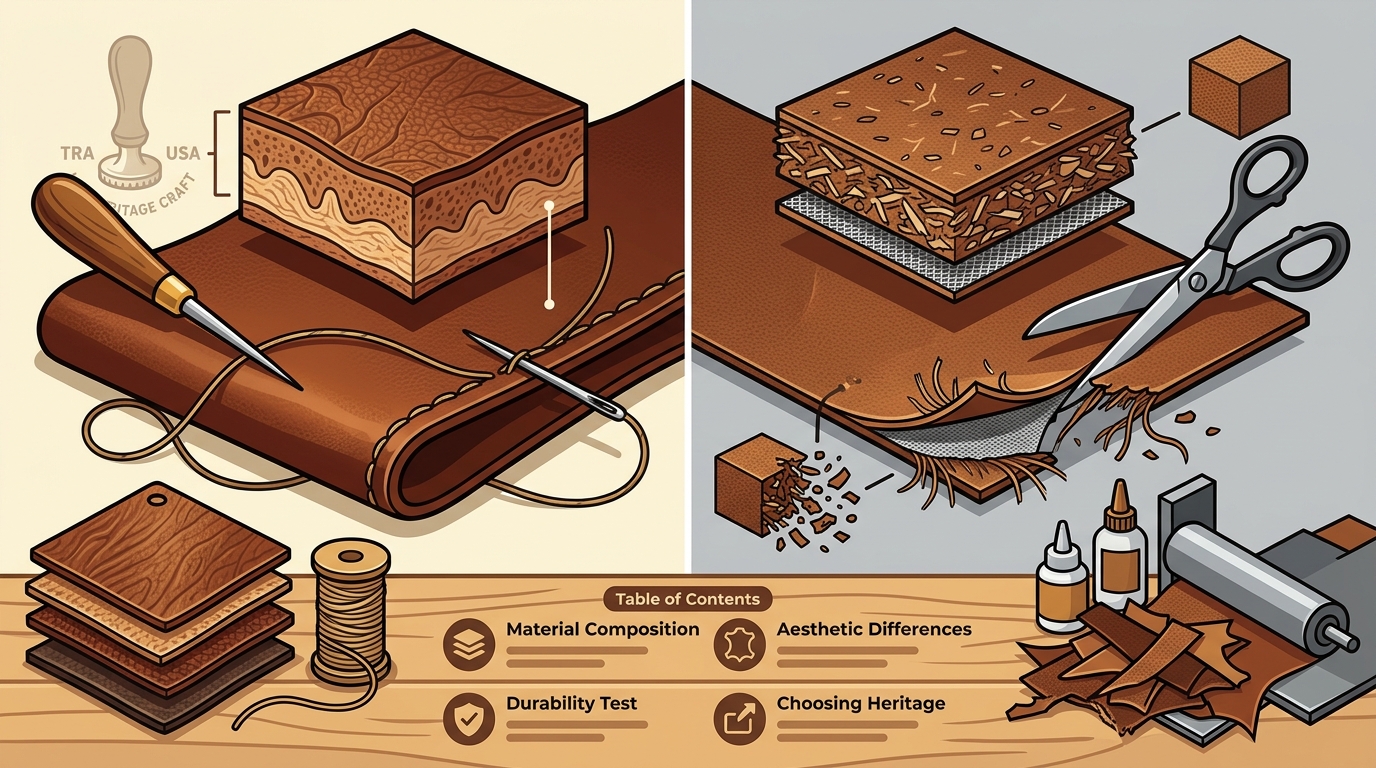
Bonded leather is a man-made material created by shredding leather scraps and binding them with polyurethane or latex. The process involves grinding leather offcuts into a pulp, mixing it with adhesives, and pressing the mixture into sheets. This material is then coated with a polyurethane layer to mimic the look of genuine leather. Because it is an engineered product, it lacks the natural fiber structure of animal hide.
The Manufacturing Process
Manufacturers collect leather trimmings from tanneries and cutting rooms. These scraps are ground into a fine powder. The powder is mixed with synthetic resins and pressed under high heat and pressure. The resulting sheet is flexible but structurally different from solid hide. The surface is often embossed with a grain pattern to resemble full-grain or top-grain leather.
Why It Exists
Bonded leather serves as a cost-effective alternative for mass-produced goods. It allows manufacturers to utilize waste materials that would otherwise be discarded. The result is a product that is cheaper to produce and easier to color consistently. However, the synthetic nature of the binder means it does not age or behave like natural leather.
Durability Comparison
Full-grain leather is the most durable form of leather because it retains the natural grain layer. This layer contains the densest part of the hide, providing superior strength and resistance to tearing. Bonded leather, by contrast, is prone to peeling and cracking over time. The synthetic coating can separate from the core material, especially with frequent flexing.
Structural Integrity
Full-grain leather has a continuous fiber structure that distributes stress evenly. When a full-grain bag is bent, the fibers stretch and recover without breaking. Bonded leather relies on the adhesive bond between the pulp and the coating. Over years of use, this bond can weaken. The surface may begin to flake, revealing the rough pulp underneath.
Longevity Expectations
A well-made full-grain leather bag can last for decades with proper care. The material becomes more supple and resistant to wear as it ages. Bonded leather typically has a shorter lifespan. It may last several years, but it is not designed to be an heirloom item. The synthetic components degrade faster than natural fibers.
Patina Development
Patina is the natural change in color and texture that occurs as leather ages. Full-grain leather develops a rich, unique patina that reflects its history of use. The oils in the leather interact with light, air, and handling, creating a deep, lustrous finish. Bonded leather does not develop a true patina. Its surface is sealed with synthetic materials that prevent the natural aging process.
The Aesthetic of Aging
With full-grain leather, scratches and marks become part of the character. The leather darkens in areas of frequent contact, creating a personalized look. This is a hallmark of high-quality craftsmanship. Bonded leather remains static. It may fade or crack, but it does not gain the depth and richness associated with aged hide.
Why Patina Matters
For many collectors and professionals, patina is a sign of quality and longevity. It indicates that the material is real and capable of improving with age. USA Heritage Craft emphasizes this aspect of craftsmanship, noting that their bags are built to last decades, not years. The patina is a visual record of the owner's journey.
Leather Content Percentages
Leather content percentages indicate the proportion of actual leather fibers in a bonded product. These percentages vary widely, ranging from 10% to 50%. A higher percentage generally means more leather pulp and less synthetic filler. However, even a 50% bonded leather product is still a composite material. It is not the same as full-grain or top-grain leather.
Understanding the Label
When shopping for leather goods, check the material description. If a product is labeled as bonded leather, it is not solid hide. The percentage of leather content is a key indicator of quality within the bonded category. Products with lower percentages are more likely to fail quickly. Full-grain leather, by definition, is 100% natural hide.
Impact on Performance
The leather content affects the feel and durability of the product. Higher content bonded leather may feel more substantial. However, the synthetic binder still limits its lifespan. Full-grain leather offers consistent performance because it is a single, natural material. There are no weak points created by mixing different substances.
| Feature | Full-Grain Leather | Bonded Leather |
|---|---|---|
| Composition | 100% natural hide | Leather scraps + synthetic binder |
| Durability | High, lasts decades | Low, prone to peeling |
| Patina | Develops unique character | No true patina |
| Breathability | High, natural pores | Low, synthetic coating |
| Cost | Higher initial cost | Lower initial cost |
Key Takeaways
- Full-grain leather is the top layer of the hide and is the most durable.
- Bonded leather is a composite material made from shredded scraps and adhesives.
- Full-grain leather develops a unique patina that improves with age.
- Bonded leather does not develop a true patina and may peel over time.
- Leather content percentages in bonded products range from 10% to 50%.
- Full-grain leather is breathable and ages gracefully.
- Bonded leather is a cost-effective option but lacks longevity.
- Choosing full-grain leather is an investment in quality and heritage.
Frequently Asked Questions
Is bonded leather real leather?
Bonded leather contains real leather fibers, but it is a composite material. It is not solid hide. The leather is mixed with synthetic binders to create a sheet.
Which is more durable, full-grain or bonded leather?
Full-grain leather is significantly more durable. It retains the natural grain layer, which provides strength. Bonded leather is prone to peeling and cracking.
Does bonded leather develop a patina?
No, bonded leather does not develop a true patina. The synthetic coating prevents the natural aging process. Full-grain leather develops a rich patina over time.
What is the best leather for a briefcase?
Full-grain leather is the best choice for a briefcase. It offers durability, breathability, and the ability to develop a patina. It is ideal for professional use.
How do I care for full-grain leather?
Care for full-grain leather by conditioning it regularly. Use a wax-free conditioner to keep the leather supple. Avoid exposing it to excessive moisture or heat.
Is bonded leather a good value?
Bonded leather is a lower-cost option, but it may not be a good long-term value. It has a shorter lifespan and does not age well. Full-grain leather is a better investment.
Conclusion
Understanding the difference between full-grain and bonded leather is essential for making an informed purchase. Full-grain leather offers superior durability, breathability, and the ability to develop a unique patina. Bonded leather is a cost-effective alternative but lacks the longevity and character of natural hide. For those seeking quality that lasts, full-grain leather is the clear choice. USA Heritage Craft specializes in premium American leather goods, built to last a lifetime. Explore our collections to find a bag that reflects your heritage and ambition. Learn more about our craftsmanship and how we ensure every piece meets exacting standards. Visit our leather care guide to maintain your investment. Discover the difference that quality makes. Contact us at USA Heritage Craft for more information.