
How to Identify High-Quality Leather Products: The Ultimate Guide
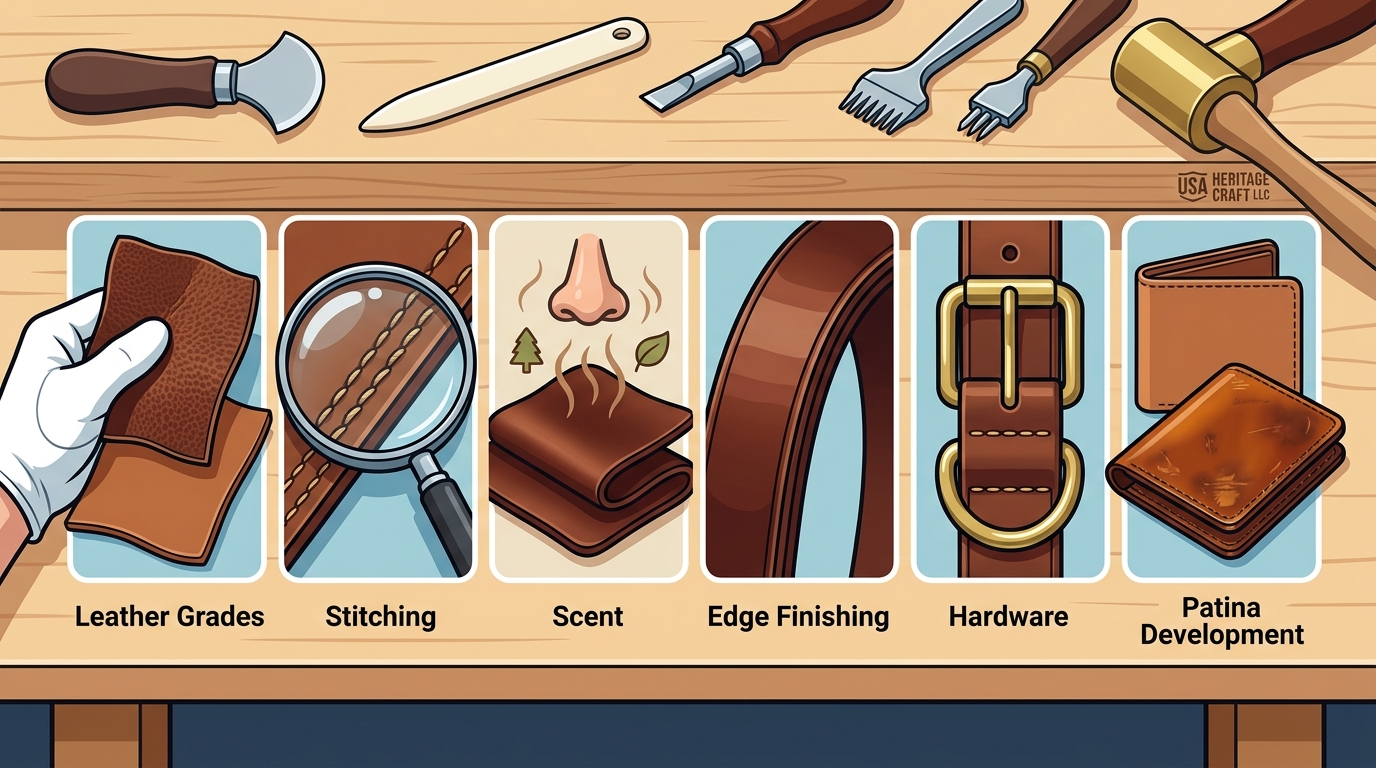
High-quality leather is identified by full-grain material, hand-stitched construction, and robust hardware. USA Heritage Craft curates premium, USA-made goods that meet these strict standards. This guide covers six critical inspection points: leather grades, stitching, scent, edge finishing, hardware, and patina development.
Leather Grades: Understanding the Hierarchy
Leather grade is the classification of hide based on the amount of processing and surface correction. Understanding this hierarchy is the first step in evaluating any product. The market is flooded with misleading labels, so knowing the difference between top-tier and low-tier materials is essential.
Full-Grain vs. Top-Grain
Full-grain leather is the highest quality grade, retaining the natural grain and all unique markings of the hide. It is the strongest and most durable option. Top-grain leather is sanded to remove imperfections, which weakens the material slightly but allows for a uniform finish.
Split and Corrected Grain
Split leather is the inner layer of the hide, lacking the dense outer grain. Corrected grain leather is heavily sanded and embossed with a synthetic coating. These grades are common in mass-produced goods but lack the longevity and breathability of full-grain hides.
At USA Heritage Craft, we prioritize full-grain American leather. This material ages with character rather than wearing out. You can explore our featured collection to see how premium hides are presented in our signature designs.
Stitching and Construction: The Skeleton of the Bag
Stitching is the structural integrity of a leather product. The method used to join pieces of leather determines how long the item will last under stress. A single failed stitch can compromise the entire bag.
Hand-Stitching vs. Machine Stitching
Hand-stitching is a traditional technique using waxed thread and two needles. This creates a saddle stitch, where each stitch is independent. If one thread breaks, the others hold. Machine stitching uses a single continuous thread, meaning a break can unravel the entire seam.
Thread Quality and Tension
High-quality thread is waxed and tightly woven. It should sit flush against the leather without gaps. Loose or uneven stitching indicates poor craftsmanship. The tension must be consistent to prevent the leather from puckering or tearing at the seam.
Our craftspeople use traditional techniques that take three times longer but last three times longer. This commitment to excellence is detailed in our About our Craft page, where we explain the meditative precision of hand-stitching.
Smell and Scent: The Olfactory Test
Smell is a reliable indicator of leather quality and chemical treatment. Genuine leather has a distinct, natural aroma that is often described as rich and earthy. This scent comes from the tanning process and the natural oils in the hide.
Identifying Chemical Odors
Low-quality leather often smells like chemicals, plastic, or gasoline. These odors indicate the use of synthetic tanning agents or heavy chemical coatings. If a bag smells overpowering or artificial, it is likely made from corrected grain or synthetic materials.
The Scent of Full-Grain
Full-grain leather smells like a tannery. It is subtle and pleasant. The scent should not be cloying. Over time, the natural oils in the leather may mellow the scent, but the underlying earthiness remains. This is a sign of honest material.
When you receive a USA Heritage Craft bag, the scent is a testament to the premium materials used. We source from artisans who understand that the smell is part of the heritage. You can learn more about our sourcing philosophy on our About page.
Edge Finishing: The Details That Matter
Edge finishing is the process of sealing and smoothing the cut edges of the leather. This is often the first thing a discerning buyer notices. A poorly finished edge is a sign of rushed production.
Burnished Edges
Burnished edges are polished using heat, moisture, and specialized tools. This creates a smooth, glossy surface that is durable and beautiful. The edge should be seamless with the face of the leather. There should be no rough spots or gaps.
Painted and Coated Edges
Painted edges are covered in a thick layer of dye or plastic. While they look uniform, they can crack and peel over time. Coated edges are similar but may feel sticky or waxy. These methods are common in mass-produced goods but do not age well.
Our finishing phase is where a good piece becomes a great one. Edges are beveled, sanded, and conditioned with natural oils. This process is described in our About our Craft section, highlighting the intentionality of every step.
Hardware Quality: Function Meets Aesthetics
Hardware is the metal components of a bag, including zippers, clasps, and handles. The quality of the hardware directly impacts the bag's durability and appearance. Cheap hardware is the first point of failure in many bags.
Material and Finish
High-quality hardware is made from solid metals like brass, stainless steel, or aluminum. It should feel heavy and substantial. The finish should be even and resistant to tarnishing. Plated hardware is often used in lower-end products and can flake off.
Mechanical Function
Zippers should glide smoothly without catching. Clasps should snap shut securely. Handles should be reinforced with steel or other sturdy materials. Test the hardware by opening and closing it multiple times. It should feel solid and responsive.
USA Heritage Craft uses stainless steel hardware and YKK brand nylon zippers. These components are chosen for their reliability and longevity. You can see the specific hardware used in our The Lincoln Brief, which features steel-reinforced handles and double tuck-lock closures.
Patina Development: Aging with Grace
Patina is the change in color and texture that occurs as leather ages. It is a sign of quality, not wear. Full-grain leather develops a rich, deep patina that enhances its beauty. This is a key differentiator between heirloom-quality goods and disposable items.
How Patina Forms
Patina forms as the leather absorbs natural oils from your hands and the environment. It also darkens slightly with exposure to light. The process is gradual and unique to each user. The result is a bag that looks better with age.
Mass-Produced vs. Handcrafted
Mass-produced bags with synthetic coatings do not develop a patina. Instead, the coating cracks and peels. Handcrafted full-grain leather, however, softens and molds to its user. The creases and marks become part of the bag's story. This longevity is a core value at USA Heritage Craft.
We believe in uncompromising quality. Our products are designed to be passed down, not replaced. You can explore our collections to find a piece that will grow with you.
Quality Comparison Table
| Grade | Full-Grain | Corrected Grain / Split |
| Stitching | Hand-Stitched (Saddle) | Machine-Stitched |
| Smell | Natural, Earthy | Chemical, Plastic |
| Edges | Burnished, Smooth | Painted, Coated |
| Hardware | Solid Metal, Heavy | Plated, Light |
| Aging | Develops Patina | Cracks, Peels |
Key Takeaways
- Full-grain leather is the highest quality grade, retaining the natural grain and durability.
- Hand-stitching creates independent stitches that hold even if one breaks.
- A natural, earthy smell indicates genuine leather, while chemical odors suggest synthetic materials.
- Burnished edges are smooth and durable, unlike painted edges that crack over time.
- Solid metal hardware is heavier and more reliable than plated alternatives.
- Patina is a sign of quality, as full-grain leather improves in appearance with age.
- USA Heritage Craft curates premium, USA-made full-grain leather goods built to last.
- Investing in high-quality leather is an investment in longevity and heritage.
Frequently Asked Questions
What is the difference between full-grain and top-grain leather?
Full-grain leather retains the natural grain and all unique markings of the hide. Top-grain leather is sanded to remove imperfections, which weakens the material slightly.
How can I tell if a bag is hand-stitched?
Why does leather smell like chemicals?
Chemical odors indicate the use of synthetic tanning agents or heavy coatings. Genuine leather has a natural, earthy smell.
What is edge burnishing?
Edge burnishing is a process where the leather edge is sealed and smoothed using heat, moisture, and tools. It creates a durable, glossy finish.
Does full-grain leather develop a patina?
Yes, full-grain leather develops a rich patina as it ages. This enhances its beauty and is a sign of quality.
Where are USA Heritage Craft bags made?
All bags sold by USA Heritage Craft are made in the USA by artisans who use traditional techniques.
How should I care for my leather bag?
Condition your leather regularly with a wax-free conditioner. Avoid exposing it to excessive moisture or direct sunlight for prolonged periods.
Conclusion
Identifying high-quality leather requires attention to detail. From the grade of the hide to the finish of the edges, every aspect matters. USA Heritage Craft is committed to providing products that meet these high standards. We believe in heritage you build, not inherit. Explore our Leather Care guide to ensure your investment lasts for decades.