
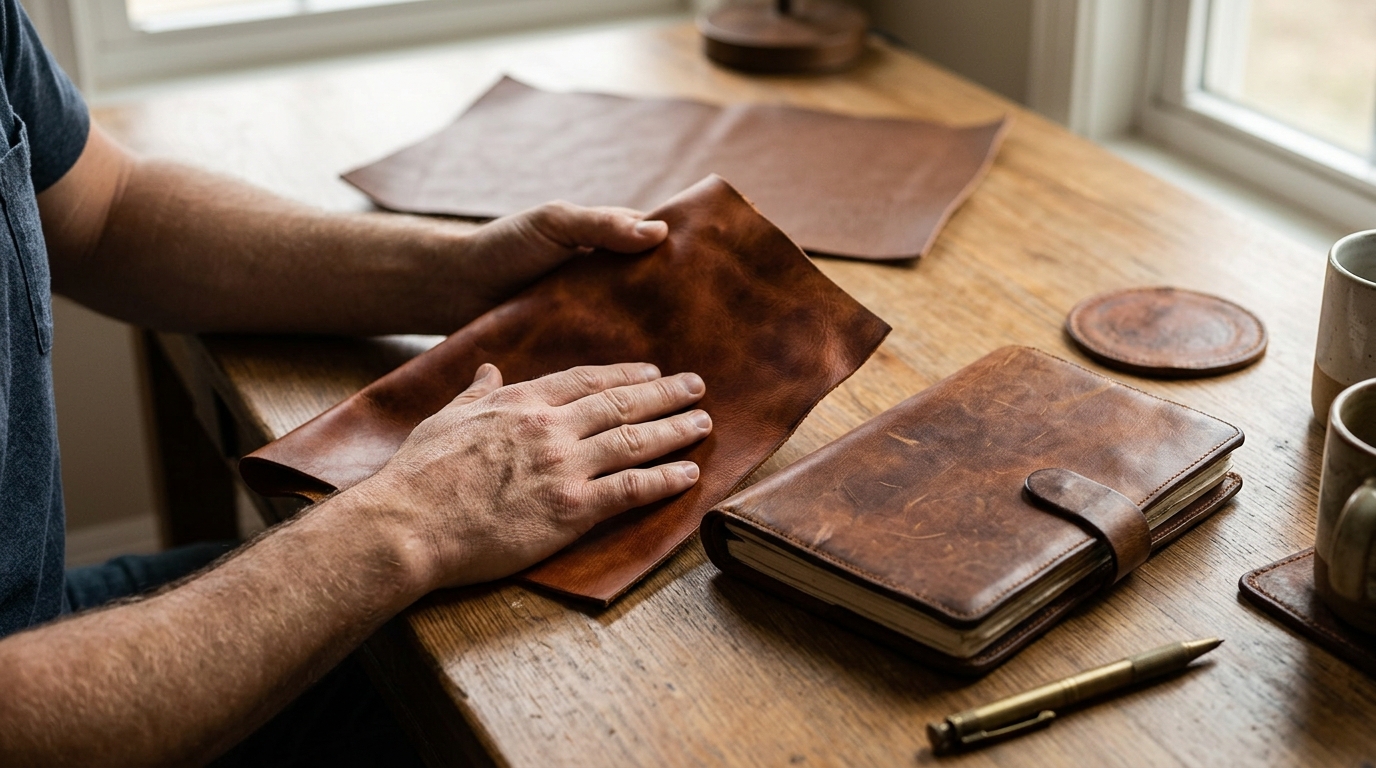
Full-grain leather develops a rich, darkening patina as natural oils and environmental exposure interact with its intact surface fibers. Bonded leather, composed of shredded scraps and synthetic binders, cannot develop this organic character. Instead, it tends to crack, peel, or fade uniformly without gaining the depth and softness that define high-quality leather aging.
The Role of Structural Integrity in Aging
Full-grain leather is the highest quality grade of leather, retaining the entire outer layer of the hide. This layer contains the strongest collagen fibers in the animal skin, which remain dense and aligned. When manufacturers create bonded leather, they shred lower-grade scraps and bond them with polyurethane or latex. This composite structure lacks the continuous fiber network necessary for graceful aging. The result is a material that behaves more like a plastic composite than a living organic material.
The structural difference dictates how the material responds to stress. Full-grain leather distributes weight and tension across its dense fiber matrix. Over time, this matrix softens and molds to the user's habits. Bonded leather, however, relies on the adhesive strength of its binder. As the binder degrades, the surface becomes brittle. This fundamental difference means that full-grain leather improves with use, while bonded leather degrades.
Mechanics of Patina Formation
Patina is the visual change that occurs as leather ages and interacts with its environment. In full-grain leather, this process is driven by the absorption of natural oils from the user's hands and exposure to light and air. The leather darkens and softens, creating a unique look that reflects its history. This is not a sign of wear but a sign of quality. The material becomes more supple and comfortable with each use, developing a luster that synthetic materials cannot replicate.
Bonded leather does not absorb oils in the same way. Its surface is often coated or sealed to mimic the look of genuine leather. Because it lacks the porous, organic structure of full-grain hide, it cannot develop a deep, uneven color variation. Instead, it may show uniform fading or surface cracking. The absence of a true patina is a key differentiator for consumers seeking heirloom-quality goods. At USA Heritage Craft, we emphasize that this natural aging process is a feature, not a flaw.
Response to Water and Oils
Full-grain leather is naturally water-resistant due to its dense grain structure. Water beads and rolls off the surface, allowing the leather to breathe and dry naturally. This breathability is crucial for long-term health. If moisture is trapped, it can lead to mildew or swelling. However, full-grain leather can recover from minor moisture exposure if dried properly. The material's ability to manage moisture contributes to its longevity and character development.
Bonded leather, on the other hand, is often less breathable. The synthetic binders and coatings can trap moisture against the underlying fibers. This can lead to swelling or delamination over time. While bonded leather may appear water-resistant initially, its long-term performance is compromised by its composite nature. Understanding this difference helps buyers make informed decisions about durability and maintenance.
Maintenance and Care Requirements
Caring for full-grain leather is straightforward and enhances its patina. Regular conditioning with a wax-free formula helps maintain the leather's suppleness and prevents drying. USA Heritage Craft recommends using Apple Leather Care, a conditioner that penetrates the fibers without leaving a greasy residue. This care routine supports the natural aging process, ensuring the leather continues to develop character rather than cracking. The simplicity of this care is a significant advantage for busy professionals.
Bonded leather requires different care, often involving synthetic cleaners that may not be effective. Because it cannot absorb conditioners deeply, the surface may become sticky or discolored over time. The lack of a natural oil reservoir means that bonded leather does not benefit from the same conditioning routines that enhance full-grain leather. This difference in maintenance highlights the long-term value of investing in full-grain materials.
Long-Term Value and Heirloom Potential
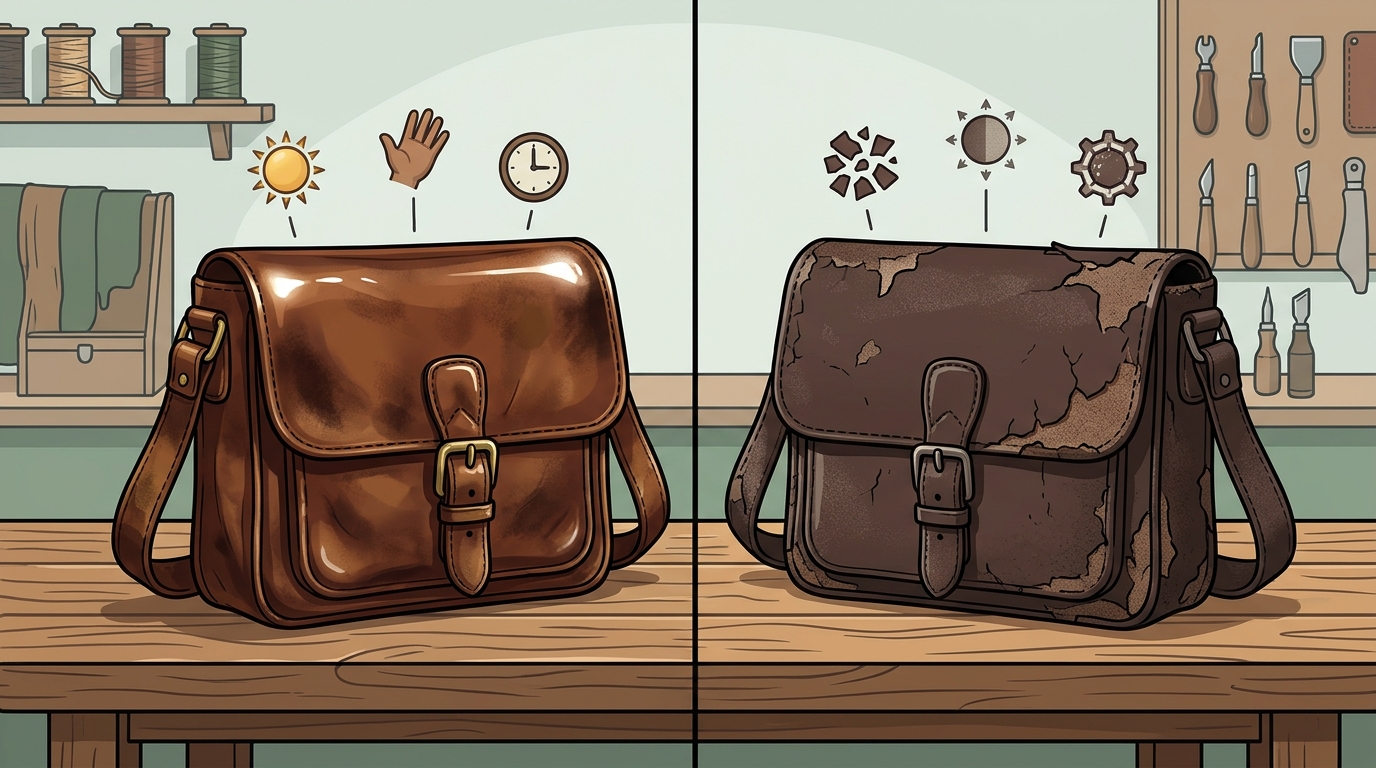
Full-grain leather is an investment that appreciates in aesthetic value over time. A well-crafted bag made from full-grain leather can last for decades, becoming a unique piece that tells a story. The patina that develops is a record of its use, adding to its desirability. This longevity stands in stark contrast to mass-produced goods designed for planned obsolescence. Choosing full-grain leather means choosing a material that improves with age, offering both functional and emotional value.
Bonded leather, by contrast, has a limited lifespan. As the binder degrades, the material loses its structural integrity and aesthetic appeal. It does not become more beautiful with age; it simply wears out. For those seeking a bag that will last a lifetime, full-grain leather is the clear choice. The investment in quality materials pays off in durability, character, and long-term satisfaction.
Key Takeaways
- Full-grain leather retains the entire outer layer of the hide, providing superior structural integrity for aging.
- Patina is a natural darkening and softening process unique to full-grain leather, driven by oil absorption and environmental exposure.
- Bonded leather is a composite material that cannot develop a true patina and tends to crack or peel over time.
- Full-grain leather is breathable and water-resistant, allowing it to manage moisture and maintain long-term health.
- Regular conditioning with wax-free products enhances the patina and extends the life of full-grain leather.
- Full-grain leather offers heirloom potential, improving in aesthetic value as it ages, unlike bonded leather.
Frequently Asked Questions
What is patina in leather?
Patina is the visual change that occurs as leather ages, characterized by darkening, softening, and the development of a unique luster.
Can bonded leather develop a patina?
No, bonded leather cannot develop a true patina because it is a composite material that lacks the organic structure of full-grain hide.
How long does it take for full-grain leather to develop a patina?
Patina development begins immediately with use and becomes more pronounced over months and years of regular handling and exposure.
Is full-grain leather more durable than bonded leather?
Yes, full-grain leather is significantly more durable due to its intact fiber structure, which resists tearing and abrasion better than bonded composites.
How should I care for full-grain leather to enhance its patina?
Apply a wax-free conditioner periodically to keep the leather supple and prevent drying, which supports the natural aging process.
Does full-grain leather stain easily?
Conclusion
The difference between full-grain and bonded leather is most evident in how they age. Full-grain leather develops a rich, unique patina that enhances its beauty and value over time. Bonded leather, lacking the organic structure necessary for this process, degrades rather than improves. For those seeking a bag that reflects their journey and lasts a lifetime, full-grain leather is the definitive choice. Explore the USA Heritage Craft collections to find a piece that embodies this heritage of quality and character.