
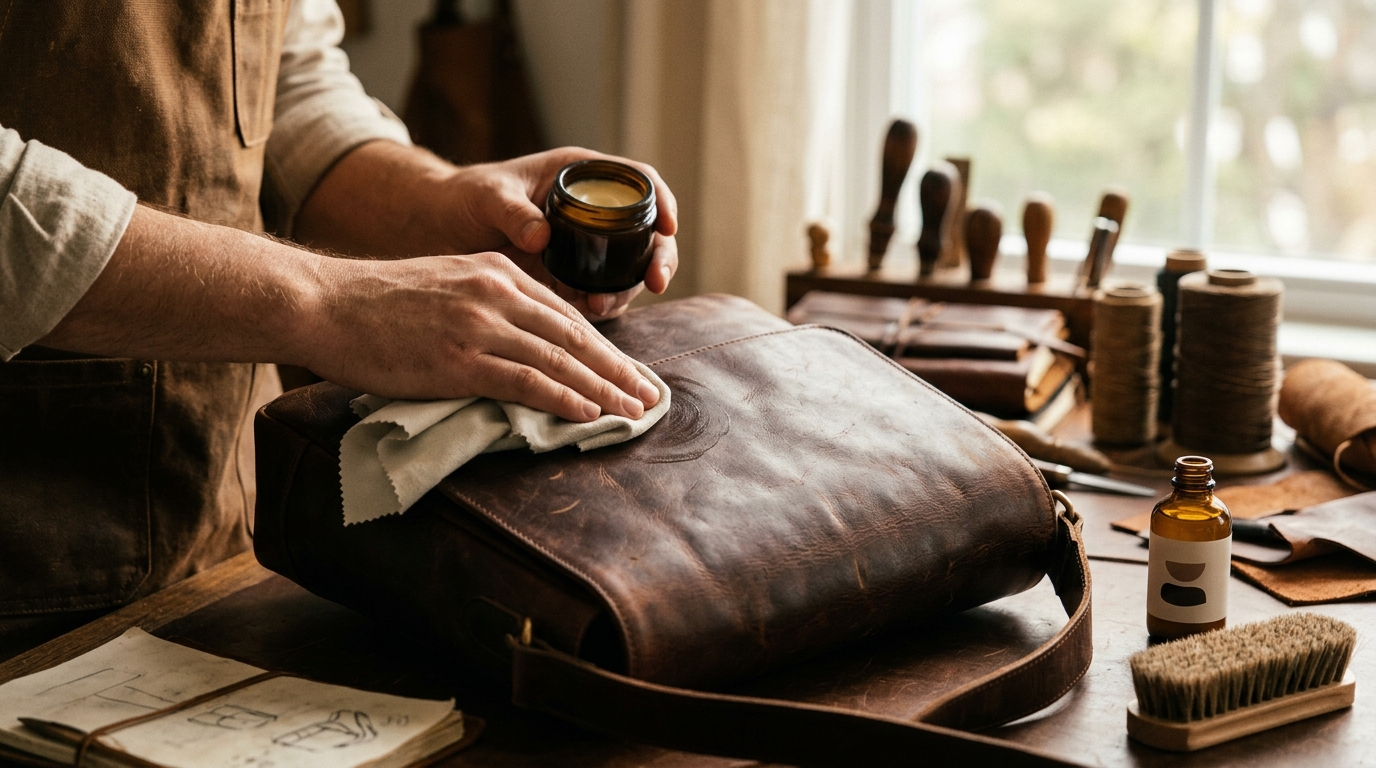
Proper maintenance extends the life of your full-grain leather bag by decades. USA Heritage Craft provides this guide to help you preserve the integrity of your investment. This article covers conditioning schedules, spill management, and deep cleaning techniques. You will learn how to protect your bag from daily wear and environmental damage. Follow these steps to keep your leather looking its best for years to come. For additional details, review the .
Leather Conditioning Frequency
Leather conditioning is the process of applying a specialized oil or cream to replenish natural fats in the hide. Full-grain leather is a type of leather that retains the outermost layer of the hide, including the grain. This layer provides natural resistance to water and wear. Without regular conditioning, the leather can dry out and crack over time. For additional details, review the Customer Experience.
Establishing a Routine
Most full-grain leather bags require conditioning every three to six months. This frequency depends on how often you use the bag and your local climate. In dry environments, you may need to condition more frequently. In humid climates, the leather retains moisture longer, so you can condition less often. Always test the conditioner on a small, hidden area first. For additional details, review the Frequently Asked Questions.
Choosing the Right Product
Immediate Spill Blotting
Immediate action is critical when liquid spills on your leather bag. Water spots and stains can become permanent if left untreated. The goal is to remove the liquid before it penetrates the grain. Speed is the most important factor in preventing damage. For additional details, review the About.
Handling Water Spills
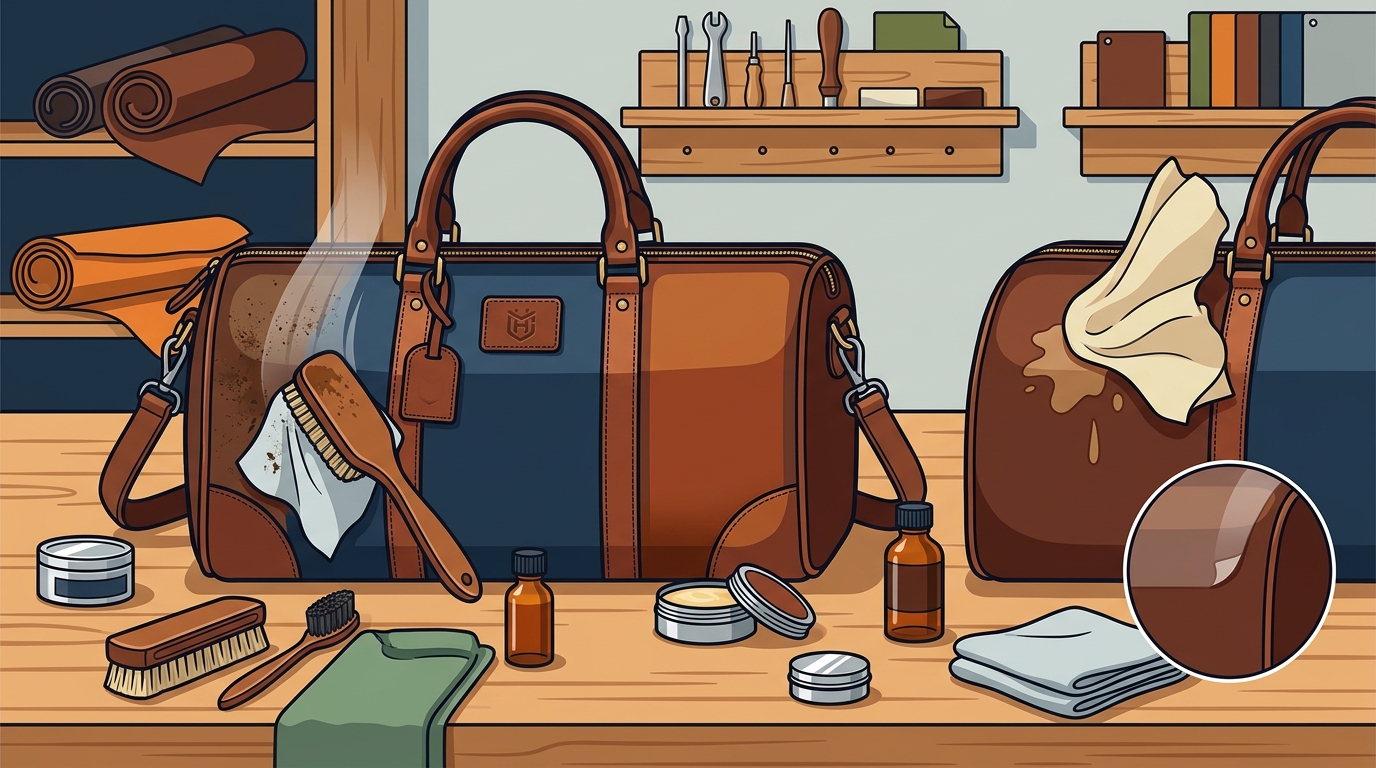
Use a clean, absorbent white cloth to blot the spill immediately. Do not rub the area, as this can spread the liquid and push it deeper into the leather. Continue blotting until the surface feels dry. If the bag is wet, let it air dry at room temperature. Never use a hair dryer or direct heat, as this can cause the leather to shrink and crack.
Managing Ink and Coffee
Ink and coffee are more difficult to remove than water. For ink, blot gently with a cloth dampened with isopropyl alcohol. Test the alcohol on a hidden area first to ensure it does not strip the color. For coffee, use a mild soap solution and a soft cloth. Blot the stain from the outside in to prevent spreading. If the stain persists, consult a professional leather cleaner.
Deep Cleaning Methods
Deep cleaning is necessary when surface dust and dirt accumulate over time. This process removes embedded grime that regular wiping cannot address. Perform a deep clean once or twice a year, or when the bag looks dull. Use gentle products to avoid damaging the leather finish.
Step-by-Step Cleaning Process
Start by removing any loose dust with a soft brush. Mix a small amount of mild, pH-neutral soap with warm water. Dip a soft cloth into the solution and wring it out until it is barely damp. Wipe the bag in gentle, circular motions. Avoid soaking the leather, as excess water can cause warping. Wipe the bag with a clean, damp cloth to remove soap residue. Allow the bag to air dry completely before conditioning.
Addressing Scratches and Scuffs
Maintenance Method Comparison
| Method | Frequency | Best For | Tools Needed |
|---|---|---|---|
| Conditioning | Every 3-6 months | Dry or stiff leather | Leather conditioner, soft cloth |
| Spill Blotting | Immediately upon spill | Water, ink, coffee | Absorbent cloth, isopropyl alcohol |
| Deep Cleaning | 1-2 times per year | Embedded dirt and grime | Mild soap, soft brush, damp cloth |
Key Takeaways
- Condition your full-grain leather bag every three to six months to prevent drying.
- Blot spills immediately with an absorbent cloth; never rub the area.
- Air dry wet bags at room temperature; avoid direct heat sources.
- Use pH-neutral soap for deep cleaning to protect the leather finish.
- Test all cleaning products on a hidden area before full application.
- Store your bag in a breathable dust bag to prevent mold and mildew.
- Address scratches promptly with a leather repair kit for best results.
Frequently Asked Questions
How often should I condition my leather bag?
You should condition your full-grain leather bag every three to six months. Adjust this frequency based on your climate and usage. In dry climates, condition more often to prevent cracking.
Can I use household soap to clean my leather bag?
It is best to avoid household soaps, as they can be too harsh. Use a pH-neutral leather cleaner or a mild dish soap diluted in water. Always test on a small area first.
What should I do if my bag gets wet?
Blot the excess water with a clean cloth immediately. Let the bag air dry at room temperature. Do not use a hair dryer or place it near a heater, as heat can damage the leather.
How do I remove ink stains from leather?
Blot the ink with a cloth dampened with isopropyl alcohol. Test the alcohol on a hidden area first. Work from the outside of the stain inward to prevent spreading.
Is full-grain leather waterproof?
Full-grain leather is water-resistant but not waterproof. It can handle light rain, but prolonged exposure to water can cause damage. Always blot spills immediately and condition regularly.
How should I store my leather bag?
Store your bag in a breathable cotton dust bag. Keep it in a cool, dry place away from direct sunlight. Stuff the bag with acid-free tissue paper to help it retain its shape.
Can I use a leather conditioner on a colored bag?
Yes, but use a neutral, clear conditioner to avoid changing the color. Test the product on a hidden area first. Avoid colored conditioners unless you are trying to restore a faded color.
Conclusion
Maintaining your full-grain leather bag is a simple process that requires consistency. By following the conditioning schedule, managing spills immediately, and performing regular deep cleans, you can keep your bag looking new for decades. USA Heritage Craft is committed to providing high-quality leather goods that last. Visit our homepage to explore our collection of fine leather bags. Take care of your investment, and it will serve you well for years to come.