
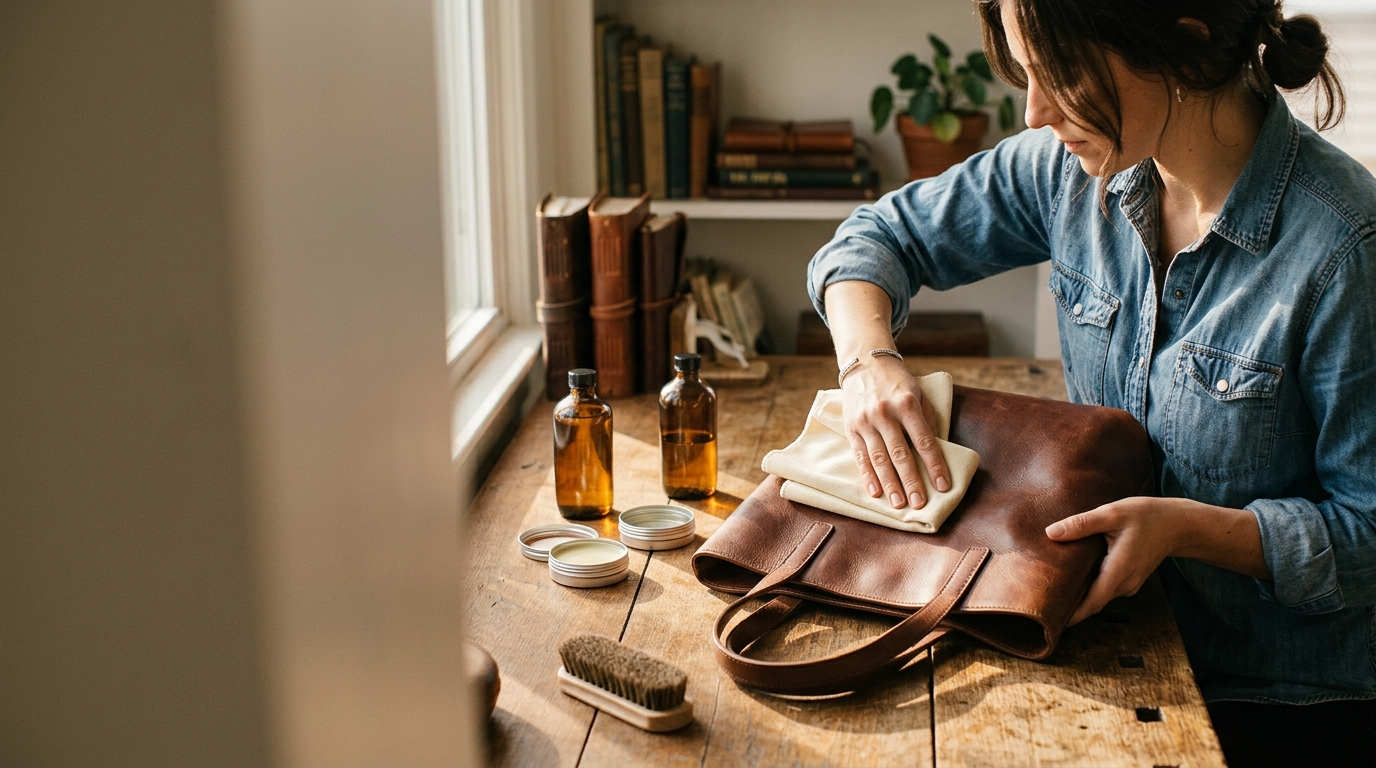
Full-grain leather is a material that improves with age, but only if you treat it correctly. The best leather care products for beginners are a soft microfiber cloth, a gentle pH-neutral cleaner, and a wax-free conditioner. USA Heritage Craft provides this guide to help you protect your investment. We cover the essential tools, application techniques, and common mistakes to avoid.
Microfiber Cloths
Microfiber cloths are synthetic fabrics with extremely fine fibers that trap dust and dirt without scratching the surface. For leather care, you need a cloth that is lint-free and soft. Cotton rags can leave behind fibers that stick to the leather, creating a dull appearance. A high-quality microfiber cloth is the first tool you should buy. It is inexpensive and essential for every cleaning session.
Why Microfiber Works
The structure of microfiber allows it to lift particles rather than pushing them around. This is critical for leather because abrasive particles can scratch the finish. When you wipe a bag, you want to remove surface dust before applying any liquid. This prevents the creation of mud-like residue that can stain the hide. Keep a dedicated cloth for leather care to avoid transferring oils from other uses.
Spot Testing Technique
Spot testing is the process of applying a small amount of product to a hidden area to check for adverse reactions. You must always test before treating the entire item. Leather is a natural material, and different tannins and dyes react differently to chemicals. A product that works on one bag might darken or strip the color from another. This step takes five minutes and can save your bag from permanent damage.
How to Test
Choose an area that is not visible during normal use. The inside of a pocket or the bottom corner are good locations. Apply a small amount of the cleaner or conditioner. Wait for it to dry completely. Check for color changes, stiffness, or residue. If the test area looks the same as the rest of the bag, you are safe to proceed. If the color changes, do not use that product on the item.
Leather Cleaner Products
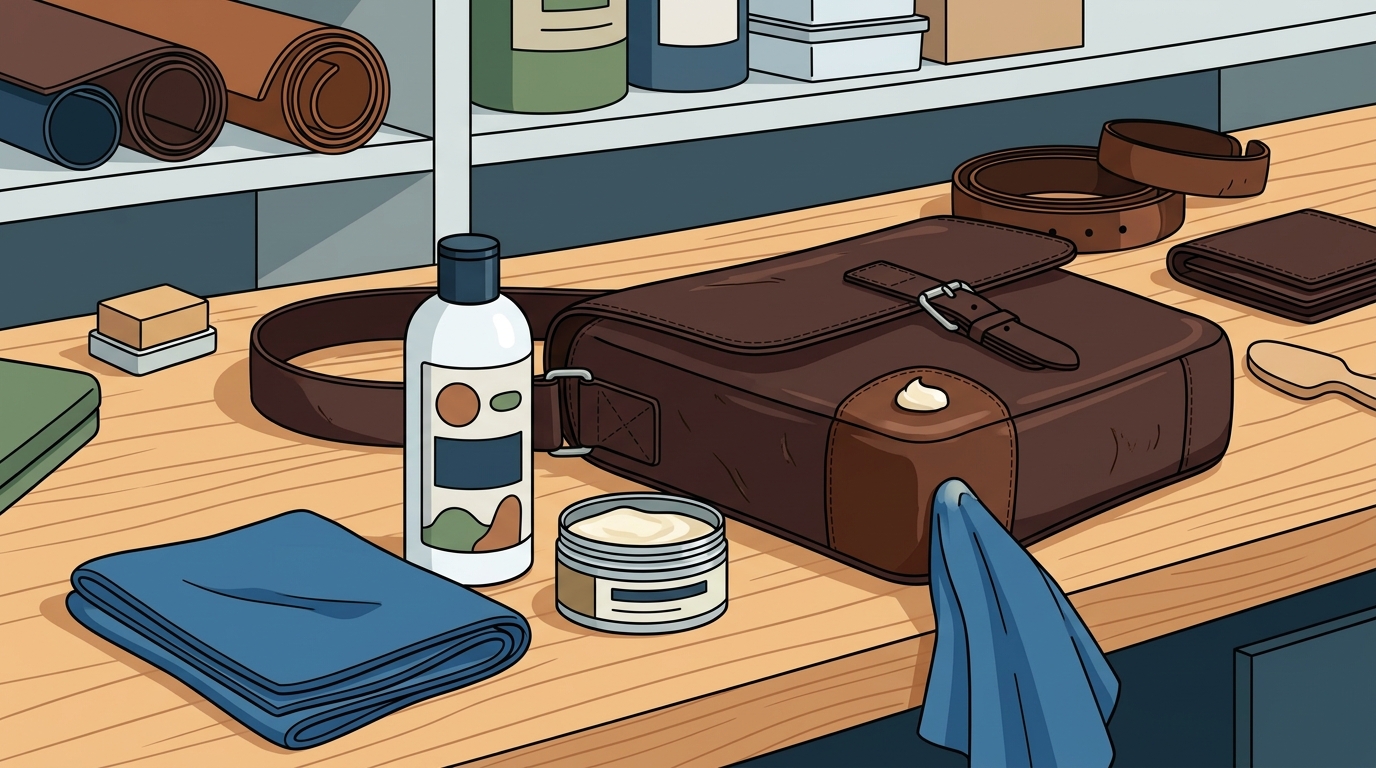
Leather cleaner is a specialized solution designed to remove dirt, oils, and grime from the surface of the hide. It is not the same as a household soap. Harsh soaps can strip the natural oils from the leather, causing it to dry out and crack. You want a cleaner that is pH-neutral and free of harsh solvents. These products are formulated to clean without damaging the delicate fibers of the leather. A good cleaner should leave the leather feeling soft, not tight.
Choosing the Right Cleaner
Look for products that are specifically labeled for full-grain leather. Avoid cleaners that contain alcohol or acetone, as these can dissolve the finish. Water-based cleaners are generally safer for most leather goods. They are gentle and effective for routine maintenance. If your bag is heavily soiled, you may need a stronger cleaner, but always start with the gentlest option first. You can always increase the strength if the first pass is not enough.
Leather Conditioner Products
Leather conditioner is a product that replenishes the natural oils lost during use and cleaning. Over time, leather dries out and becomes brittle. Conditioning restores flexibility and prevents cracking. The best conditioners are wax-free. Wax can build up on the surface, creating a cloudy film that traps dirt. A wax-free formula penetrates the fibers, keeping the leather supple from the inside out. This is the most important product in your care routine.
Why Wax-Free Matters
Wax-based conditioners can make the leather look shiny, but they do not nourish the hide. They sit on top of the surface and can peel off over time. This leads to a patchy appearance. A wax-free conditioner, such as the Apple Leather Care included with USA Heritage Craft bags, is designed to condition deeply without leaving residue. It is safe for sensitive leathers and will not darken the color. This makes it a versatile choice for beginners who are unsure of how their specific leather will react.
Beginner Care Kits
Beginner care kits are pre-assembled sets that include the essential tools and products for leather maintenance. They are a convenient way to start without buying individual items. A good kit usually contains a microfiber cloth, a cleaner, a conditioner, and sometimes a brush. These kits are often more affordable than buying the components separately. They provide a curated selection of products that work well together. This reduces the risk of buying incompatible items.
What to Look For
When choosing a kit, check the quality of the products included. Avoid kits that use cheap, harsh chemicals. Look for brands that specialize in leather care. The tools should be durable and easy to use. A kit is a great starting point, but you may eventually want to upgrade to specific products that suit your collection. Start with a kit to learn the basics, then expand your collection as needed.
Application Tools
Application tools are the implements you use to apply care products to the leather. The most common tools are microfiber cloths and soft-bristled brushes. A brush is useful for getting into crevices and textured areas. It helps to work the product into the fibers evenly. A cloth is better for smooth surfaces and for buffing the leather after conditioning. You do not need a large collection of tools to get started. A cloth and a brush are sufficient for most tasks.
Brush Selection
Choose a brush with soft, natural bristles. Stiff bristles can scratch the leather surface. Horsehair or goat hair brushes are ideal. They are gentle yet effective. Use the brush in circular motions to work the product into the leather. This ensures even coverage. After applying the product, use a clean cloth to buff the surface. This removes any excess product and brings out a natural shine.
Beginner Care Techniques
Beginner care techniques are the basic steps you follow to clean and condition your leather goods. The process is simple but requires patience. You should clean the leather before conditioning. This ensures that the conditioner can penetrate the fibers without being blocked by dirt. Apply products in thin layers. Thick layers can lead to buildup and a sticky surface. Allow the leather to dry naturally. Do not use heat to speed up the process, as this can damage the hide.
Step-by-Step Routine
Start by wiping the bag with a dry microfiber cloth to remove loose dust. Apply a small amount of cleaner to a damp cloth. Gently wipe the surface in circular motions. Wipe away any residue with a clean cloth. Let the leather dry completely. Apply a thin layer of conditioner to a clean cloth. Rub it into the leather in circular motions. Let it absorb for a few hours. Buff the surface with a dry cloth. This routine should be performed every few months, depending on use.
Product Comparison
| Product Type | Primary Function | Best For | Frequency |
|---|---|---|---|
| Microfiber Cloth | Dust removal and buffing | Daily maintenance | Weekly |
| Leather Cleaner | Removing dirt and grime | Deep cleaning | Every 3-6 months |
| Leather Conditioner | Replenishing oils | Preventing dryness | Every 3-6 months |
| Soft Brush | Applying products to textured areas | Even application | As needed |
Key Takeaways
- Start with a high-quality microfiber cloth to remove dust without scratching.
- Always spot test new products on a hidden area before full application.
- Use a pH-neutral cleaner to avoid stripping natural oils from the leather.
- Choose a wax-free conditioner to prevent surface buildup and cloudiness.
- Apply products in thin layers to ensure even absorption and avoid stickiness.
- Allow leather to dry naturally; never use heat to speed up the process.
- Consistency is key; a regular care routine extends the life of your bag.
- USA Heritage Craft bags include Apple Leather Care, a trusted wax-free conditioner.
Frequently Asked Questions
How often should I condition my leather bag?
You should condition your leather bag every three to six months. The exact frequency depends on how often you use the bag and the climate in which you live. In dry climates, you may need to condition more frequently. In humid climates, you can go longer between applications. Always check the feel of the leather. If it feels dry or stiff, it is time to condition.
Can I use household soap to clean leather?
No, you should not use household soap to clean leather. Most household soaps are too harsh and can strip the natural oils from the hide. This can cause the leather to dry out and crack. Use a specialized leather cleaner that is pH-neutral and formulated for leather care. These products are gentle and effective without causing damage.
What is the difference between a cleaner and a conditioner?
A cleaner removes dirt, oils, and grime from the surface of the leather. A conditioner replenishes the natural oils that are lost during use and cleaning. You should always clean before conditioning. This ensures that the conditioner can penetrate the fibers effectively. Using a conditioner on dirty leather can trap dirt inside the hide, leading to stains.
Is wax-based conditioner bad for leather?
Wax-based conditioners can be problematic for some leathers. They can build up on the surface, creating a cloudy film that traps dirt. This can lead to a patchy appearance over time. Wax-free conditioners are generally preferred for full-grain leather. They penetrate the fibers and keep the leather supple without leaving residue. Check the label to see if the product is wax-free.
How do I remove excess conditioner?
Use a clean, dry microfiber cloth to buff the surface after conditioning. This removes any excess product that has not been absorbed. Buffing in circular motions helps to bring out a natural shine. If the leather feels sticky, you have applied too much product. Wipe it down with a slightly damp cloth to remove the excess. Then buff again with a dry cloth.
Can I use a hair dryer to dry leather?
No, you should never use a hair dryer or any other heat source to dry leather. Heat can cause the leather to dry out too quickly, leading to cracking and brittleness. Always allow the leather to dry naturally at room temperature. This may take a few hours, but it is the safest method. Rushing the drying process can cause permanent damage to the hide.
What should I do if my leather gets wet?
If your leather gets wet, let it dry naturally at room temperature. Do not use heat. Once it is dry, apply a conditioner to replenish any lost oils. Water can strip the natural oils from the leather, so conditioning is essential after exposure to moisture. If the leather feels stiff after drying, it may need a deeper conditioning treatment.
Where can I find reliable leather care products?
You can find reliable leather care products from specialized leather care brands. USA Heritage Craft includes Apple Leather Care with their bags, which is a trusted, wax-free conditioner. You can also purchase individual products from reputable retailers. Look for products that are specifically designed for full-grain leather. Avoid cheap, unbranded products that may contain harsh chemicals.
Conclusion
Caring for your leather goods is a simple process that requires the right tools and a bit of patience. By starting with a microfiber cloth, a gentle cleaner, and a wax-free conditioner, you can protect your investment for years to come. Always spot test new products and apply them in thin layers. USA Heritage Craft is committed to helping you maintain your bags. We include Apple Leather Care with our products to ensure you have the best start. Visit our Leather Care page for more detailed instructions. Explore our Collections to find a bag that fits your style. For questions, . Learn more about our About our Craft page to understand the quality behind our products. Discover the difference with Discover the Difference.