
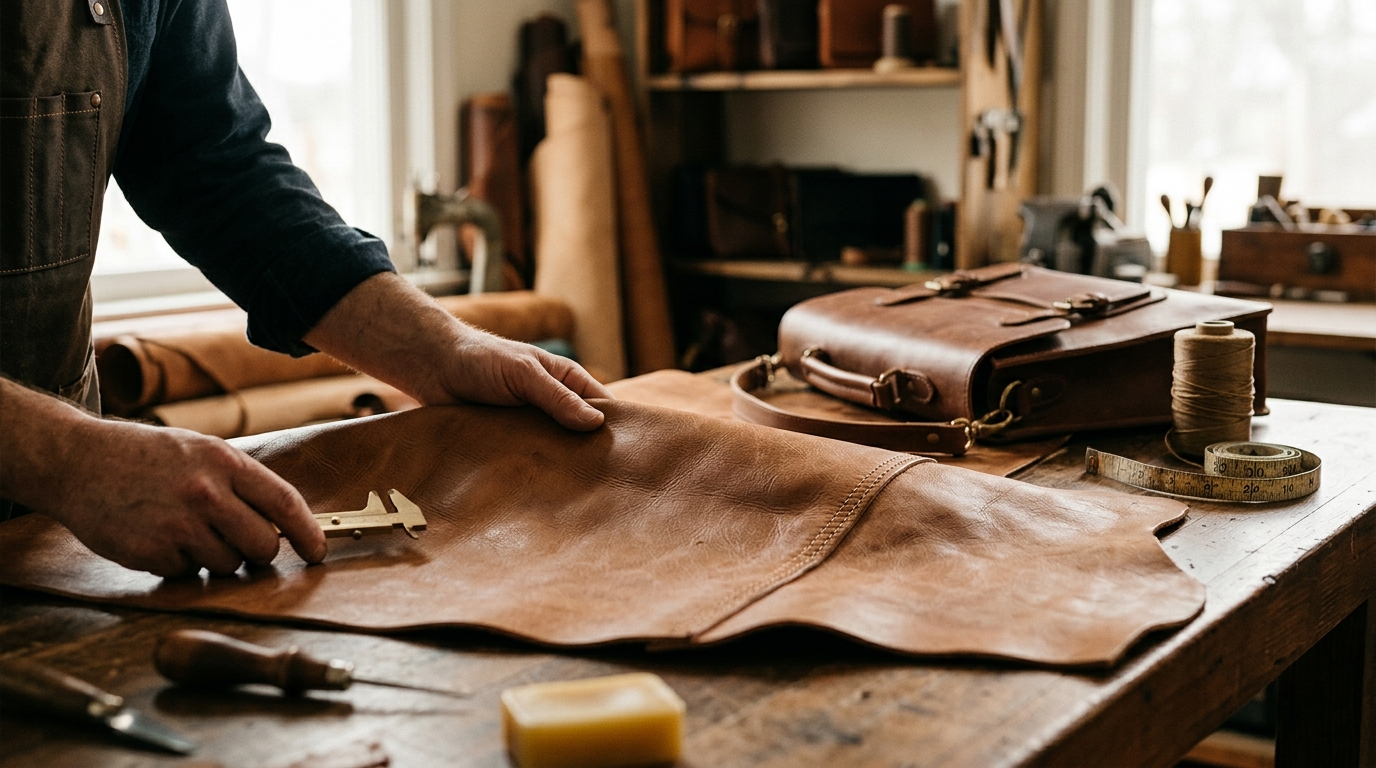
High-quality leather is identified by full-grain material, hand-stitched construction, and natural patina development. USA Heritage Craft curates premium American leather goods built to last a lifetime. This guide covers nine critical inspection points, including leather grades, stitching, hardware, and scent, to help you distinguish heirloom pieces from mass-produced imitations.
Patina Development
Patina is the natural aging process where leather darkens and develops character over time. High-quality full-grain leather improves with age, while coated synthetic materials crack and peel. When evaluating a bag, look for uncoated surfaces that allow the hide to breathe and react to light and use. Discover the difference between mass-produced goods and handcrafted pieces by observing how the material responds to daily wear. A true heirloom piece becomes more beautiful as it accumulates stories, rather than looking worn out.
Leather Grades
Leather grade is the classification system based on the amount of the hide's natural surface that remains intact. Full-grain leather is the highest grade, retaining the entire outer layer including natural imperfections. Top-grain leather is sanded to remove imperfections, while bonded leather is made from scraps glued together. Understanding these distinctions is crucial for assessing long-term durability and aesthetic potential.
Full-Grain vs. Top-Grain
Full-grain leather is the strongest and most durable option available. It features a tight grain structure that resists wear and develops a rich patina. Top-grain leather is softer but less durable because the sanding process removes the strongest fibers. For a bag intended to last decades, full-grain is the only acceptable standard.
Identifying Bonded Leather
Bonded leather is a low-grade material made from shredded leather fibers mixed with polyurethane. It feels stiff, smells chemical, and will eventually flake or peel. If a product claims to be leather but feels like plastic or has a uniform, artificial texture, it is likely bonded. Explore our collections to see the difference in texture and weight between genuine full-grain hides and inferior alternatives.
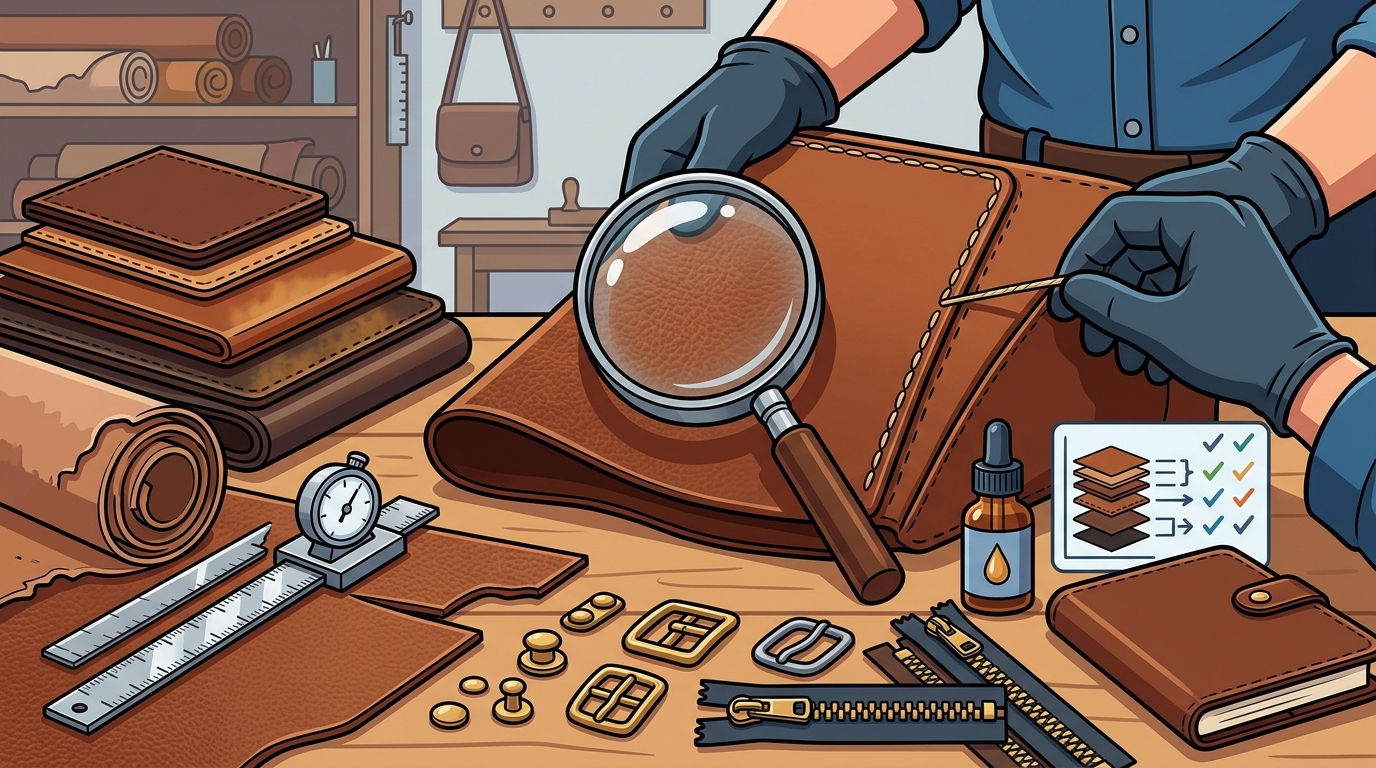
Stitching and Construction
Saddle Stitching Benefits
Saddle stitching is a method where two threads are interlocked, providing superior strength. If one thread breaks, the other holds the seam together. This technique takes three times longer than machine stitching but results in a product that lasts three times longer. Learn about our craft to understand why we prioritize this labor-intensive method for every bag we curate.
Thread Material
Waxed linen or nylon thread is standard for high-end leatherwork. Plastic thread is a red flag for mass production. The thread should be thick enough to withstand tension but thin enough to pass through the leather without tearing. Quality thread is also color-matched or intentionally contrasted to highlight the construction.
Smell and Scent
Leather scent is a direct indicator of the tanning process and material quality. Genuine leather has a distinct, earthy aroma derived from the tanning agents used. Cheap synthetic materials often smell like plastic, chemicals, or nothing at all. When you open a package, the first thing you notice should be a rich, natural smell that fades slightly over time but never becomes offensive.
Tanning Agents and Aroma
Hardware Quality
Hardware quality is a critical differentiator between luxury and mass-produced goods. Premium hardware is machined from solid metal, such as brass or stainless steel, rather than stamped from thin sheet metal. Stamped hardware is lightweight, prone to bending, and often plated with a thin layer of finish that wears off quickly. Machined hardware has weight, substance, and a finish that integrates with the leather over time.
Weight and Finish
Lift the bag and feel the weight of the zippers, clasps, and handles. Solid metal hardware adds significant weight, which is a sign of quality. The finish should be even, without bubbles or peeling. Over time, brass hardware develops a patina that complements the leather, creating a cohesive aesthetic. The Lincoln Brief features stainless steel hardware designed to withstand decades of daily use without corrosion or failure.
Edge Finishing
Edge finishing is the process of sealing and smoothing the cut edges of the leather. A properly burnished edge is smooth, rounded, and has a subtle sheen. This process involves beveling, sanding, and applying natural oils or waxes to seal the fibers. Poorly finished edges are rough, sharp, or covered in thick plastic paint that cracks and chips. The edge is often the first place a bag shows signs of wear, so quality finishing is essential for longevity.
Burnishing vs. Painting
Burnishing is a traditional technique that uses heat and moisture to compress the leather fibers, creating a durable, natural finish. Edge painting uses synthetic dyes and glues to cover imperfections, which eventually peel. Look for edges that feel smooth to the touch and show a gradient of color rather than a flat, painted surface. Our finishing techniques ensure that every edge is prepared for a lifetime of stories, not just a season of use.
Natural Scent
Natural scent is the organic aroma emitted by untreated or minimally treated leather. It is a sign that the hide has not been masked with synthetic fragrances or heavy chemical coatings. This scent is subtle and evolves as the leather ages. It should be pleasant and not overpowering. If a product smells like perfume or artificial chemicals, it is likely hiding poor quality materials or excessive tanning agents.
Why Scent Matters
The scent of leather is a sensory cue for quality. It indicates that the material is genuine and has been treated with care. A natural scent also suggests that the leather is breathable, which is important for preventing moisture buildup and mildew. Using the right conditioner helps preserve this natural scent by replenishing the leather's internal oils without introducing synthetic additives.
Feel and Flexibility
Feel and flexibility are direct indicators of the leather's quality and tanning process. High-quality leather is supple yet firm, offering resistance that prevents it from collapsing under weight. It should bend smoothly without cracking or showing white stress lines. Cheap leather is either too stiff, which makes it uncomfortable, or too soft, which causes it to sag and lose shape. The right balance of flexibility and structure is a hallmark of premium craftsmanship.
Testing Flexibility
Flex the leather gently in your hands. It should return to its original shape without permanent creasing. If it leaves deep, sharp creases, the leather is likely low-grade or poorly tanned. Full-grain leather has a natural grain structure that provides resilience, allowing it to flex and recover. Our featured collection includes pieces crafted from full-grain distressed cowhide, known for its exceptional balance of durability and comfort.
Natural Smell
Natural smell is the inherent aroma of the leather hide, distinct from added fragrances. It is a key indicator of the tanning method and the quality of the raw material. Vegetable-tanned leather has a distinct, earthy smell, while chrome-tanned leather has a sharper scent. Both are natural, but the smell should be consistent and not chemical. A strong, artificial smell is a red flag for low-quality materials or excessive chemical treatments.
Smell as a Quality Indicator
The natural smell of leather is a sensory test that can be performed instantly. It requires no tools or expertise, just a good nose. If the smell is pleasant and earthy, it is a good sign. If it is chemical, plastic-like, or overpowering, it is a warning sign. Discover the difference by comparing the scent of a mass-produced bag with a handcrafted one. The contrast is often immediate and clear.
Key Takeaways
- Full-grain leather is the highest grade and develops a rich patina over time.
- Hand-stitched construction with waxed thread is far more durable than machine stitching.
- Premium hardware is machined from solid metal and has significant weight.
- Proper edge finishing involves burnishing, not painting, to ensure longevity.
- Natural leather scent is earthy and subtle, not chemical or plastic-like.
- High-quality leather is supple yet firm, bending without cracking.
- Mass-produced bags often use coated synthetics that crack and peel within a year.
- Investing in handcrafted leather goods is an investment in longevity and heritage.
Frequently Asked Questions
What is the difference between full-grain and top-grain leather?
Full-grain leather retains the entire outer layer of the hide, including natural imperfections, making it the strongest and most durable. Top-grain leather is sanded to remove imperfections, which reduces its strength and durability. Full-grain is the preferred choice for heirloom-quality goods.
How can I tell if a bag is hand-stitched?
Why does leather smell like chemicals?
Chemical smells often indicate the use of low-grade materials or excessive tanning agents. Genuine leather has a natural, earthy scent. If a product smells like plastic or factory chemicals, it is likely made from bonded leather or synthetic materials.
What is patina and why is it important?
Patina is the natural aging process where leather darkens and develops character. It is important because it shows that the leather is genuine and will improve with age. Mass-produced goods do not develop patina; they crack and peel.
How do I care for full-grain leather?
Condition the leather regularly with a wax-free conditioner to keep it supple and prevent cracking. Avoid exposing it to excessive moisture or direct heat. Proper care ensures the leather develops a beautiful patina and lasts for decades.
Is heavier leather always better?
Heavier leather is often a sign of full-grain material, which is more durable. However, weight alone is not the only indicator. Look for a balance of weight, flexibility, and structure. A bag should feel substantial but not overly heavy or stiff.
Can I return a leather bag if it doesn't meet my expectations?
Yes, our refund policy allows for returns within 30 days if the item is in its original condition. We want you to be confident in your purchase, so please inspect your order upon receipt.
Where are USA Heritage Craft bags made?
All bags sold by USA Heritage Craft are made in the USA by artisans who have spent decades perfecting their craft. We curate only premium, USA-made, full-grain leather goods.
Conclusion
Identifying high-quality leather requires attention to detail, from the grade of the hide to the finish of the edges. By understanding these nine key indicators, you can make informed decisions that result in products that last a lifetime. to learn more about our curated collection of American-made leather goods. At USA Heritage Craft, we believe that the things you carry should reflect the discipline it took to get where you are. Choose heritage you build, not inherit.